
There is a certain ritual that happens when two people live together within the same home and then the relationship spirals into that blackhole of failure. One person must leave, or perhaps is kicked out, and there is a rapid-fire series of decisions to be made about stuff. He who is departing must make these split-second decisions about what is of the utmost importance and can also be stuffed into a duffle bag, paper bag, or cardboard box on the way out the door, all the while under the most extreme duress. Your life as you know it is imploding and you are being forced to think about stuff.
The clothes on one’s back are a given and a fresh set of underwear for tomorrow would be a wonderful luxury if remembered in that moment. A little bit of cash from the stash would be grand but where the heck is it hidden? At this point if one needs to ask, the response would certainly be a sarcastic answer. Or a certain extended digit.
I have lived this scenario not once, but twice. After the first time came a vow to rethink my material ways and proceed on with a life brimming with experiences and fulfillment and devoid of nonessential material possessions. That plan lasted for a little while, but soon that old albatross of consumerism and accumulation was again hanging about my neck. Fast forward to the most recent unexpected exit, sans a lot of stuff.
Then began this new life of minimalism.
While living a life of minimalism is, well, minimal; it is not a life of going without. It does not entail wandering the countryside like a certain fictional impoverished martial artist who only sought water. What it does entail is carefully thinking through the need and acquisition of each and every material thing.
In the new stuff category, it entails a wonderful new and modestly sized but very comfortable and very energy efficient cabin, and a new fuel efficient midsize pickup truck. A seldom used high-end generator supplies the occasional AC power needs and an often used top-of-the-line chainsaw produces the heating fuel required to fend off the cold Northern Wisconsin winters. Each are wise expenditures of money and resources and each necessary to a life well off the beaten path. It makes sense with these essential items to buy or build the best that one can afford and not have to replace them as often. It is also environmentally beneficial to buy products that will have a longer life.

However, while a crow may be attracted to shiny objects, I am the anti-crow and have always had a soft spot for dented and rusty and crusty old junk. It is fun to find a cast-off and seemingly useless artifact and give it a new lease on life through utility.
My snowmobile is a 2003 Ski Doo Tundra, an old school back country trapper machine, purchased at a forestry department surplus auction with a blown motor for the winning bid of slightly north of diddly squat. It did not take much more money or effort to get it back into good running order. Being the only link to the outside world for a winter, my life depended on that old Ski Doo. It has and continues to serve well and is not only a reliable tool, but also a fun toy for ice fishing visits and back country excursions. It just ain’t pretty.
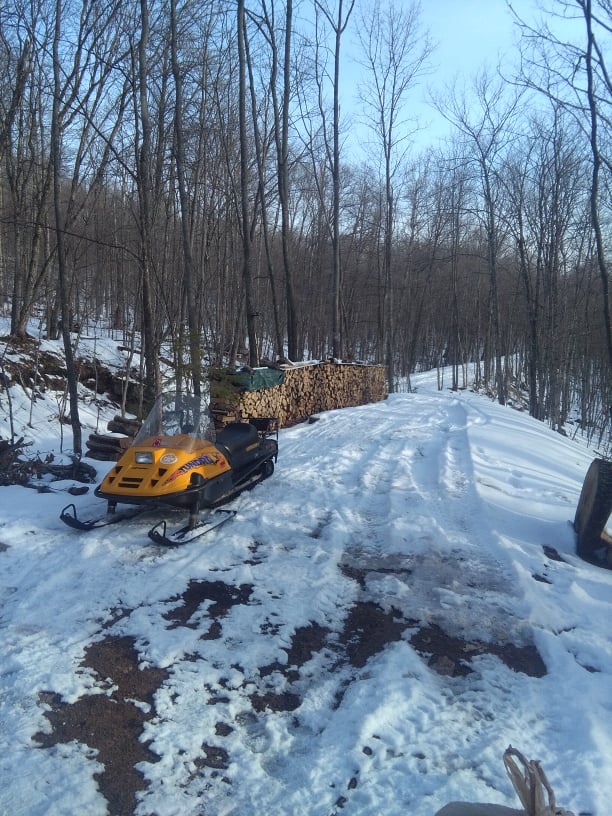
Legend has it that the engineers of that old Tundra designed it to be so brutally simple that a common outdoors person could disassemble it, then load the components onto the litter of a bush plane and be dropped off in a remote region, and then easily reassemble it in the wild. Ski Doo subsequently redesigned the Tundra, and the new larger shiny model is quite affordable and so much more capable but will no longer easily disassemble and fit on the litter of a bush plane. The need to disassemble that ratty old surplus auction Tundra and have it transported out into the wild on the litter of a bush plane will probably never arise. But if I want to, I could.
That same surplus auction coughed up an equally cast-off 1999 Suzuki King Quad ATV. Part mountain goat, part pack mule, part compact tractor; these old wheelers are a godsend to outdoors persons as they are the very definition of utility. While still in civil service, this one’s brakes had failed, and their function replaced by that of the front and rear bumpers. That poor old King Quad looked like it was pummeled to within an inch of death with an ugly stick, but it still ran like a Swiss watch. With the addition of new brakes that old beast has become a solid albeit ugly workhorse on the acreage. It was also a trusted link to the outside world during spring break-up, when the way in was still impassable and there was no longer any snow for the Tundra to traverse.

Cabin and road construction began during the dark days at the beginning of the pandemic and in a location far enough off the beaten path to be difficult to access. Folks were social distancing and being quarantined. In addition, the scope of work was quite small it was difficult to find an excavation contractor to take on such a job then make repeated return trips as the work slowly progressed. It was also not fair to ask a contractor to scrape and grind their way in through the low hanging branches and brush with a very expensive dump truck with equally expensive heavy equipment in tow, as the new road would be built later.
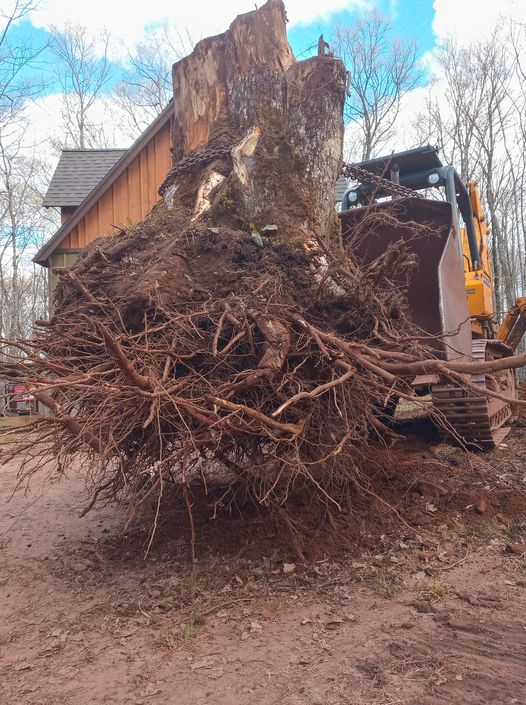
Solution came with the purchase of an old track loader bulldozer with a backhoe attachment, and then my nephew donated a destined for the scrap heap and butt ugly but stellar running 1957 Chevy dump truck named Mater. True to pattern, Mater’s brakes are of dubious operational status at any given moment. Having these two additional pieces of junk allowed me to proceed with construction and at my own pace.

So, there are two schools of thought at play.
For the good stuff, the best stuff that could be afforded was purchased with the belief that the expenditure of resources and energy required for production and distribution of a long-lasting product would be less in the long run than that of buying short lived cheap junk. It also makes good economic sense to spend a little more upfront rather than bleed dollars later from a nickel and dime death of a thousand cuts.
For the junk, by carefully choosing cast-off but highly functional vintage items there comes great environmental responsibility by utilizing something that is already in existence, and therefore requires no further resources or energy to produce. No matter how deep the snow the old Tundra trudges on, when the throttle is thumbed the King Quad goes to work, and when the lever is pulled Mater spills dirt out of the back. Function never goes out of style. And cheap and free are very desirable price tags.
Both ways have value. Our society is geared towards convenience, and we are constantly bombarded with consumptive messaging. But convenience for the sake convenience really doesn’t improve one’s life and the quicky nirvana feel good high of purchasing an object quickly fades. There is great adventure in keeping an artifact useful, and thanks to a little thing called the Internet even those with MacGruber like skill sets can achieve MacGyver like results. There is no right way or wrong way with old junk, except that the only way to completely fail is to never try. Junk is a terrible thing to waste.
Pretty hard to improve upon that stuff.

 The Unexpected Minimalist
Fantastic blog! You have described so well the 2 thought processes at work! Hubs and I are spending more time up north these days…..especially in spring, summer, and fall. We would love to come and see your place! Stay warm!
LikeLiked by 1 person
Stop by any time. I love company!
LikeLike