
I was employed for 106 weeks in the Arctic. The villages there are not connected by roads and every commodity and consumable item is either moved about by ice road, by barge during sealift if on the coast, or by aircraft. Aviation is the prime mover of people as well. Air travel is the great equalizer in the Last Frontier, as all persons great or small are dependent upon it.
There is a dizzying array of aircraft laboring in the Arctic. A rarity that far north was the float plane that is ubiquitous elsewhere in the Last Frontier. But there were the occasional bush planes sporting cartoonishly large balloon tundra tires, all types of general aviation aircraft and passenger aircraft, helicopters, and of course cargo planes. Lots of cargo planes. Airplanes in the Arctic are as commonplace as pickups and dump trucks in the Lower 48.
My primary motivation to travel half-way across the hemisphere to work in such a far flung and extreme location was money, pure and simple. The pay and benefits were stellar but that flight up to report to work was a slow and painful uprooting. It involved a myriad of shuttles and flights and layovers and usually took a very torturous 36 hours.
The final leg of that journey up was in the rear of a combi-cargo plane. As the name implies, the front of the aircraft was loaded from a garage door size forward cargo door with igloo shaped cargo pods that fit perfectly within the profile of the fuselage while us passengers were seated behind a bulkhead in the rear. The heavy realization that one had been torn from the comfort of hearth and home always occurred on that final leg. Once airborne out of Anchorage, the landing gear would retract into the gut of the combi-cargo with a sickening thump, a sullen punctuation that there was no turning back.
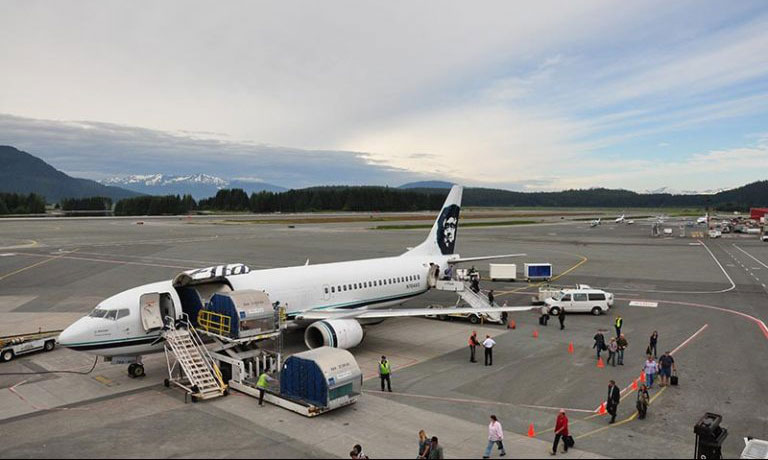
The familiar sites of water and forests and mountains slowly disappeared in the wake of the combi-cargo and were replaced by the alien by midwestern standards images of the treeless tundra dotted with bizarre Arctic polygons and the equally alien site of the ever-reaching tentacles of the crude oil pipelines.
Once the boots were on the ground in Deadhorse/Prudhoe Bay, my plan was to do everything that could possibly be done to stay busy, which lessened the sting of being away from home. There was the normal 12-hour workday seven days per week. During sealift vehicles were convoyed from the end of the Haul Road to the North Dock for barge shipment on the Beaufort Sea to the coastal villages. There was always the need for a quadra-van or bus driver after hours. There were often after hour breakdowns, projects, and emergencies. During the very short Arctic summer, various camps hosted 5k fun walk/runs. There was no time for boredom, as boredom was the gateway to homesickness.
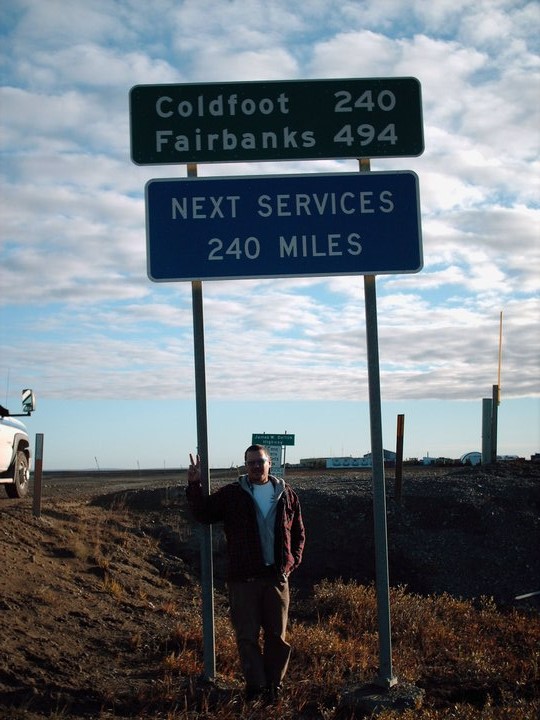
Just as the combi-cargo plane came to represent that disemboweling feeling of being uprooted and torn away on the journey up to the Arctic, it came to represent repatriation with the people and place that I loved once the time came to rotate out.
It was invigorating to feel “wheels up” as the landing gear thumped into the wheel wells and the combi-cargo climbed out of Deadhorse. There was no turning back and in 36 short hours I would be home! However, there was always a brief stop in Barrow (now renamed Utqiagvik) to drop off and pick up passengers as well as unload cargo, but that was a very small inconvenience. Heck, Barrow was a mere 35 ½ hours from home!
On an otherwise routine flight out of Deadhorse an old Inupiat man was seated at the window and a slightly more than middle aged woman was at his side in the middle seat. Mine was the aisle seat.
The woman glanced at me as I took my seat. She seemed more urban. “Your dad?”, I asked, nodding towards the old man. I was bursting with curiosity and wanted to strike up a conversation. “Coming home from the hospital”, she replied curtly before returning her attention to him.
He was old and frail. His hands were gnarled and almost skeletal, contorted by a lifetime of hard work and bitter cold. Was he a fisherman? A whaler? A hunter? He appeared larger than life. He spoke with barely a breathy whisper so I could not overhear his conversation with the woman and could draw no clues.
“Would he like the aisle seat?”, I asked, as that would give the old man much more space.
“He seldom flies and likes the window”, she replied with a forced smile before turning back to him. It was clear that she just wanted to get this journey over with and I did not want to be the chatty pest in the next seat. The combi-cargo raced down the Deadhorse runaway then climbed into the sky.
Goodness! What was this extraordinary man’s back story? Had he faced a David versus Goliath medical experience and conquered the dreaded foe trying to rob him of his remaining days? Was he now triumphantly returning home to live out those hard-earned days? Had he received the worst news of his life and was he now stoically making one last journey home to meet his maker? Would he and the other elders of the village gather and relive old adventures? Would he hold court with the children of his village and tell them wonderful and larger than life stories about a life well lived? I was beside myself with curiosity but remained respectful.
He and she chatted quietly.
On the flight from Deadhorse to Barrow/Utqiagvik, it seemed the combi-cargo barely gets up to altitude and then cruising speed before it must begin its descent. Upon descent the old man was pasted to the window. As the aircraft glided into the final approach it broke out below the clouds and the village appeared. “Barrow!”, the old man proclaimed with an almost seal-like bark. He turned away from the window and beamed at his daughter with a child-like grin. “Home”, the woman said softly.
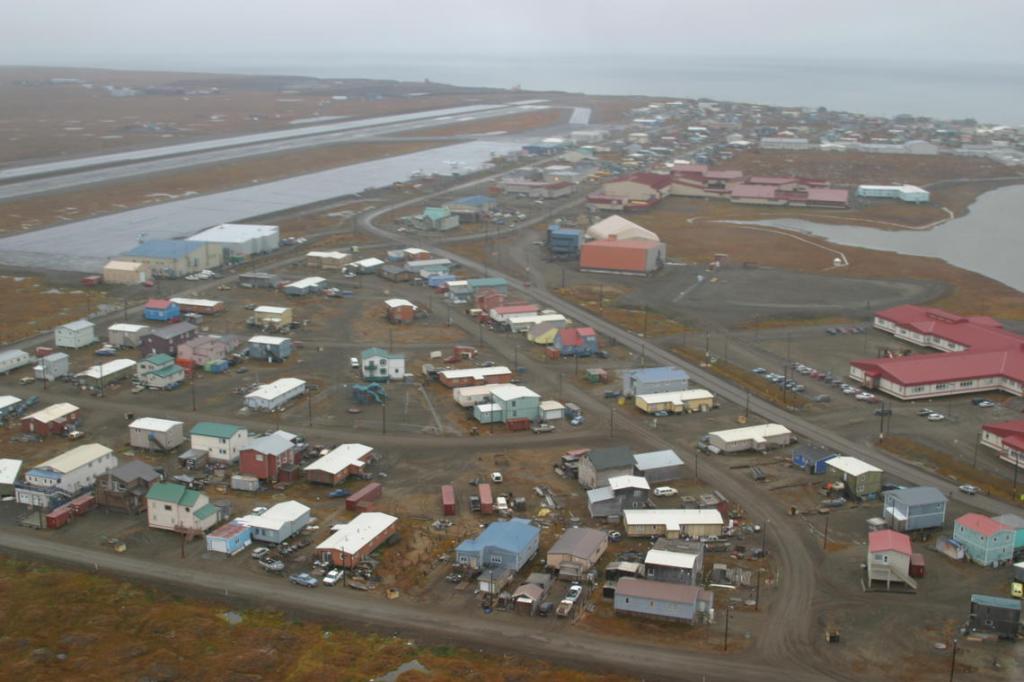
There is no jet way in Barrow and normally when a combi-cargo lands, the loadmasters spring into action and front-end loaders jostle and bounce the massive aircraft while forking the cargo pods, all before the ground crew even has the chance to position the rolling stairs up to the passenger exit.
But this day was different. There was no hustle and bustle outside of the aircraft, no frantic loadmasters and ground crews scampering about performing their usual high octane, labor-intensive ballet in the brutal sub-zero cold. The old man was too frail to traverse the rolling stairway to the ground. A lone front-end loader reverently approached with an empty cargo pod then raised it up to the passenger exit. The old man gingerly stepped from the aircraft into the cargo pod with his daughter at his side and was lowered to the ground. Once on the ground she lovingly walked away with him, their arms locked.
There is a lot to be said about returning home.
No sooner had they disappeared into the Alaska Air terminal did the organized chaos begin and front-end loaders and loadmasters and ground crews sprang into action and the plane jostled and bounced as cargo was unloaded and passengers departed and climbed aboard the rolling stairs.
I too was returning home.

 The Unexpected Minimalist