These are some very uncertain times we are living in. Things are happening hard, and things are happening fast.
By now most who read this blog are probably aware that National Endowment of the Humanities grant funding has been cancelled. This also means the end for Wisconsin Humanities, unless Congress reverses this order.
For 50 years Wisconsin Humanities has told the stories and history of Wisconsin. These are the stories of our friends and our neighbors. The places are here, in our state, along our country roads and within our neighborhoods. Wisconsin Humanities has featured every corner of the state, and the Northwoods have been very well represented.
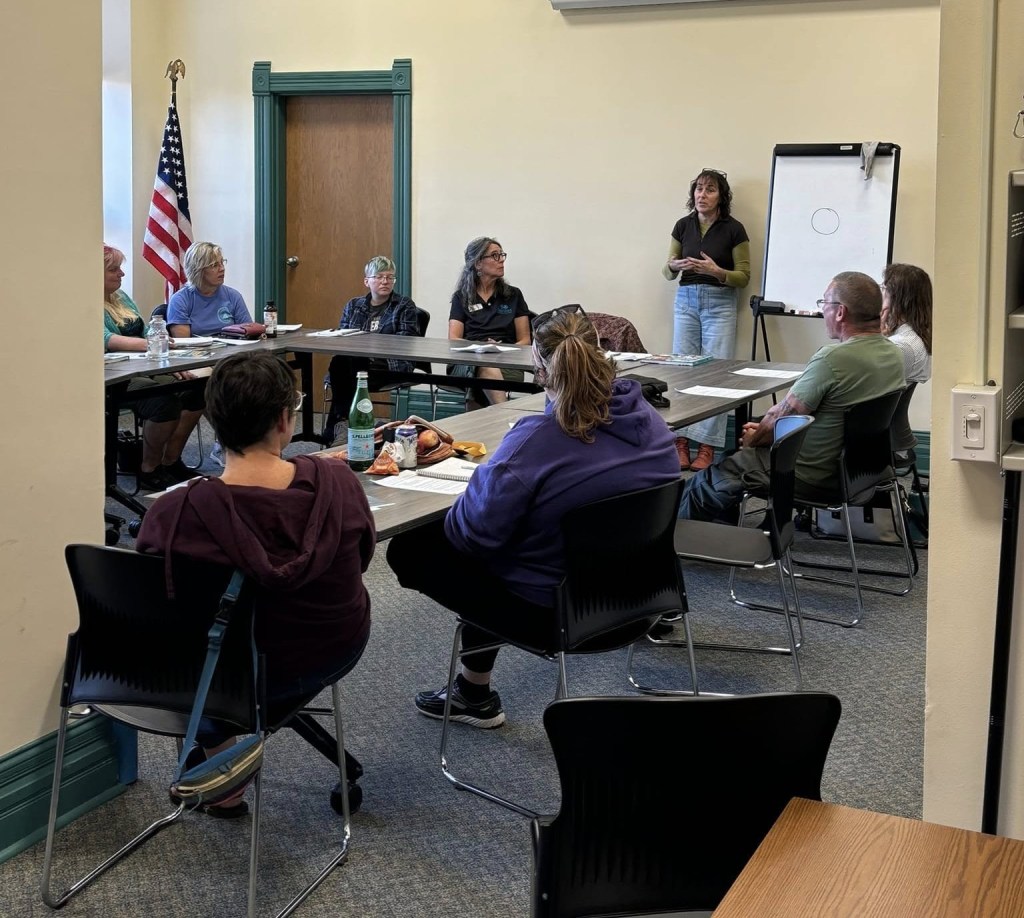
Personally, I am a big fan of Wisconsin Humanities and Love Wisconsin. I am avid follower. I love to read the stories. I enjoyed participating in a Love Wisconsin workshop held here in the Northwoods. My own quirky story was profiled by Love Wisconsin.
We cannot let Wisconsin Humanities and Love Wisconsin slip away. Please take a moment to read the words of Jan Mireles Larson and Scott Schultz below. Then please take a moment to contact your federal legislator, or to do whatever you can to help.
This is the story of us, all of us here in Wisconsin, and it is about to be erased. Please, help.
Gerry Nasi
Montreal, WI
Lost-In-The-Forest.com
Humanities needed for Wisconsin communities’ strength, growth
By Jan Mireles Larson and
Scott Schultz
Dennis Miller worked at Eau Claire’s Uniroyal plant for 15 of its 75 years. A major employer in the river town, the plant closed in June 1992 jettisoning more than 1,000 workers and shaking one of the town’s economic bedrocks.
When two local film makers approached Miller asking to share his story, he said yes. The film is an example of a project backed by Wisconsin Humanities; the film makers and Millers know the importance of such a program.
“The humanities are a necessity for people to know the truth,” Miller said.
For more than 50 years, Wisconsin Humanities has partnered with Wisconsin people to remember our shared history, our culture and, to build the bridges that help us understand who we are, where we’ve been and where we might go – together.
All is at the precipice following DOGE’s assault last week on the National Endowment for the Humanities. In the middle of the night, WH Executive Director Dena Wortzel got word that all federal funding had evaporated, effective immediately. Federal funding accounts for 85 percent of Wisconsin Humanities’ annual budget of roughly $1.2million. The rest comes from the state and private donations.
Even though Congress allocated current-year funds in mid-March, the termination letter that WH received from the acting chair of the NEH states that its grant is eliminated in its entirety. That grant award includes $400,000 for FY24 that will no longer reach Wisconsin communities unless Congress acts to reverse the order. The non-profit’s eight-person staff serves every Congressional District in the state through grants and programming partnerships with communities, libraries, historical societies, museums and other non-profits, is only months away from closing its doors.
BJ Hollars is one of the filmmakers behind, “When Rubber Hit the Road,” a documentary about the closing of Eau Claire’s Uniroyal tire plant and its aftermath.
He understands just what will be lost if Wisconsin Humanities is shuttered.
“Upon receiving a grant from Wisconsin Humanities, my film partner and I were able to create a one-hour documentary that captured one of our region’s most vital stories – resilience in a time of manufacturing decline.”
Beyond telling a story, Hollars added, the film “served as an economic driver, more than doubling the grant money we received from Wisconsin Humanities and placing it directly back into the region’s theater’s hotels, and restaurants.
What will the end of Wisconsin Humanities mean?
Grants: Wisconsin Humanities’ grant program provides support for public humanities projects that strengthen our democracy through educational and cultural programs that build connections and understanding among Wisconsin citizens. Last year, 220 grant-related events were funded, with more than 80,000 participants.
One recent grant went to the Headwaters Council for the Performing Arts in Eagle River, Wisconsin. The council sought funding for a single performance based on the songs from WWII. Planning for one concert mushroomed into collaborations with multiple community organizations. They reached out to area vets for a “Veterans and Families Expression Day,” that sought to move beyond the “thank you for your service” statement and into a tangible response to assure area vets and families their memories and experiences have value. Library exhibits, veteran’s writings and art pieces were woven into a series of events. Collaborators included the library, the arts center, and local Veterans Service Office.
Norma Yaeger, HCPA board president, said the WH mission was as essential as the grant funds.
“They (WH) provided the framework to see ourselves as elements of our local social fabric,” she said, “We challenged everyone to be a listener, to engage those who have a story to tell before it’s too late.”
Wisconsin Humanities also helped veterans’ voices be heard during a recent storytelling clinic at The Highground Veterans Memorial Park near Neillsville. Earlier, WH worked with The Highground to create a “My War: Wartime Photographs by Vietnam Veterans.”
Community Powered Project: Launched as a pilot in 2021, the project builds resilience in Wisconsin communities by helping them identify community needs and launch projects to meet those needs.
For example, in Spooner, Wisconsin, Angela Bodzislaw, a local librarian relied on Community Powered to launch Teen Powered, a program that connects teens and local community leaders to identify local needs and support teens in meeting those needs. Projects have included a community clean-up initiative, a park repair, and a collaboration between teens and community leaders to repurpose a building for a youth center.
Bodzislaw, who says the program is in its third year and self-sustaining, credits WH with supplying the infrastructure and training needed to get Teen Powered up and running.
“We wouldn’t have come up with it on our own,” she said, “because we wouldn’t have had the time (or skills) to do it.”
Love Wisconsin: A digital story-telling program that for the last 10 years has produced more than 150 voices connecting neighbors and communities with first-person stories.
Human Powered: A podcast series about how people make places better, Human Powered shows what happens when passionate, creative people engage deeply with neighbors and find ways to strengthen the roots of community lives. More than 3,500 people listened to the podcasts in 2024 with an additional 6,300 people visiting the website.
Program Partnerships: In addition to its own programs, Wisconsin Humanities provides financial support for humanities programming across the state. WH partners with Wisconsin Public Radio and its “Wisconsin Life,” radio programming, airing radio essays that celebrate what makes Wisconsin unique through the radio stories of its people with approximately 70,000 listeners each week.
WH also supports the Wisconsin Poet Laureate Commission and the Wisconsin Poet Laureate, the state’s ambassador for poetry.
Wisconsin historian and author Jerry Apps, who’s worked with Wisconsin Humanities on a variety of projects, offered a simplified explanation of what the humanities mean to us.
“My dad used to say, ‘there’s a tremendous difference between having information and knowing something,’” Apps said. “Humanities get to the ‘know.’ ‘Knowing’ gets to the depths of who we are.”
If the humanities teach us anything, it is the power of what we can do together. Action is needed now to safeguard one of the foundations of Wisconsin’s community.
What can you do?
- Call your federal legislators. Congress.gov allows you to type in your zip code to find your representative’s contact information. Ask them to support NEH and Wisconsin Humanities.
- Go online to WisconsinHumanities.org and see for yourself just what WH does. Then, donate to show you want to build community with friends and neighbors across the state.
- Share your own Wisconsin Humanities experience and advocate with friends, families and neighbors.
For his part, Miller is grateful to have told his story through “When Rubber Hits the Road.”
“The humanities are a form of expression of love,” he said. “And love doesn’t divide, it multiplies.”
Jan Mireles Larson of Eau Claire is a Wisconsin Humanities Board member.
Scott Schultz, a Wisconsin Humanities Board member, is a Marine Corps veteran, retired print and broadcast journalist, and founder of a nonprofit writing and arts program. He lives on a small northern Driftless Area farm near Osseo.
 The Unexpected Minimalist