The Livin’s Easy

“Summertime, and the livin’s easy”, crooned Sublime’s Bradley Nowell.

And it is indeed now glorious summertime.

All four seasons have their own special charm and unique purpose.

Autumn in the Northwoods with her mind-bending color show allows Mother Nature the opportunity to show what a trip can really be. Winter is a season of rest and solitude and the low light angles and million shades of white and gray encourage introspection, while the appearance of a spectacular clear blue winter sky infuses stark awe and joy. Spring is the season of hidden grunge and the death of the previous year slowly emerging from the melting snow, and that grunge and death is then rapidly consumed by the rebirth and reawakening of the forest.

But summer, summer is summer and the livin’s easy.
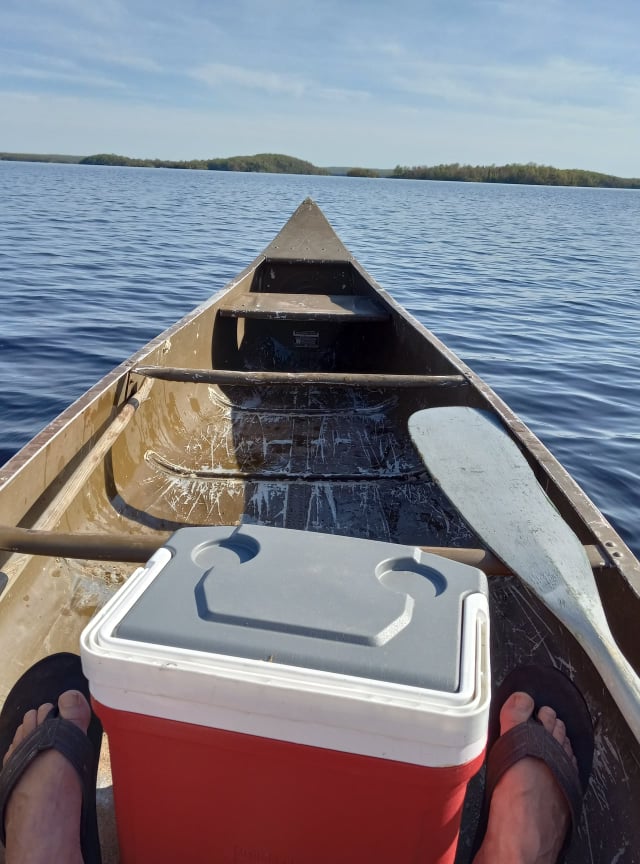
“It leaks but it doesn’t sink”.

Earlier this summer I started to build a workshop.

My siblings and I were raised to do a good day’s work for an honest day’s pay. That is a good ethic to possess. At the end of a productive day, look back with pride upon the fruit of your labor. While my normal nature would be to power through the tasks and get ‘er done, this summer has been a little different. The workshop slab was poured efficiently enough but then the efforts began to sputter.

The Gile is my usual summer bathtub, and being summer, she has now warmed. There is no better way to cleanse the worries and toil of the day away than in her pure Northwoods waters. I could spend more time framing walls but that would make for less time in the embrace of her lapping waves and then drying leisurely lying upon the Owl Rock.   

Beer tastes good any day of the year, that is simply an unbendable law of Nature. But on a hot day with the sun steadily beaming down, that first bitter ice-cold sip just tastes all that much better. I could spend more time framing walls, but it is equally rewarding to grab a lawn chair and an ice-cold bottle of Leinie’s, and then spend an evening gazing at the partially framed wall thinking about everything else but.

During summer my neighbors can get boisterous and loud at all hours. After sunset and then again just before sunrise the loons do roll call at decibel levels that fracture sound sleep. The coyotes yip and the wolf wails, but never at the same time. While the mature barred owls precisely and mournfully call out “Who cooks for you? Who cooks for you, all?”, the immature barred owls break out in an unrehearsed and unperfected noise fest that quite literally sounds like a bunch of spastic chimpanzees freshly out of Ritalin and screaming out cacophonously in the still of the night. And at first light every bird in the forest wakes and makes their presence known, a natural boreal alarm clock chiming in through an open bedroom window.

It would be nice if for just one morning the birds would sleep in, even for just a half of an hour, but they never do. However, when they fly south at summer’s end and the forest falls silent, their ceaseless summertime wakeup calls are sorely missed.

Fortunately, knock on wood, the dick neighbors Ursus Americanus have been giving me a little wider berth this summer.

I could spend more time framing walls, but then I might neglect to spend time in the beat-up rowboat generously offered by my nephew or the equally beat-up canoe bought from Madeline who lives on Madeline Island. “It leaks but it doesn’t sink”, she said matter of fact and no truer words have ever been spoken in the history of used canoe sales. A beat-up rowboat and canoe are precious things to waste.

I could spend more time framing walls, but then I might miss out on basking in the sun on our glorious Northwoods beaches with those who mean the most to me. I might miss out on playing with the beautiful children whose wonder and joy renew my spirit and for a moment strip the inevitableness of aging from my soul. I might miss sitting out on a pleasant evening, sipping Sangria with loved ones who embrace and console and argue and bitch and expand my heart and mind and challenge me to view the world through a different prism.

It is inevitable that summer may eventually whimper away or possibly even suddenly flee, but the partially framed walls won’t. If I do absolutely nothing, they still be there when the leaves turn. If I do absolutely nothing, they will still be there when the snow flies. If I do absolutely nothing, they will still be there when the snow melts away next spring.

But that’s OK.

It’s summertime, and the livin’s easy.
Outside Screwing

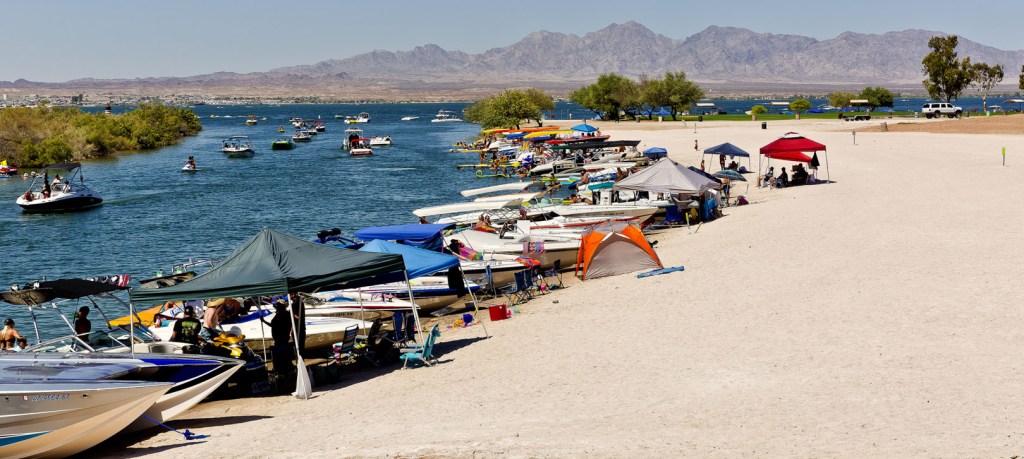
Lake Havasu City, Arizona is one the most fun places to be on Planet Earth, especially on a Holiday weekend when the Southern California partygoers flock in.

On such a weekend those that might normally indulge in a few cocktails might get caught up in the moment and find themselves poop in the pants plastered, those that normally indulge in more plant-based forms of enjoyment might partake in Fatties that would be the envy of Snoop Dog and shrooms that would make Hunter S. Thompson see things he ain’t never seen before. Those that normally don’t partake in nude slip-and-slide and then forgot to slather their entire body in SPF-One Bazillion sunscreen would certainly turn pasty skin that usually never sees the light of day bright lobster red.

But as fun as it is, Havasu was a difficult place for a working-class person to migrate to with the expectation of maintaining the same standard of living that is attainable in a locale with much higher wages and with comparable housing costs.

Such was the lesson learned while living there for a short while back in the day. I had landed a dream job that was super pimp and fun and exciting and mentally challenging, but with less than stellar pay and the savings were subsidizing the rent. “How do you do it?”, I sullenly asked a friend who seemed to have it all.

This was just a few short years before the housing crash and Great Recession.

“It’s easy, dude!”, he replied, “you just buy a house and then use the equity as your personal ATM. Need something? Refinance! That way there is no 4×4 payment for you and no payments on your lady’s SUV. No boat payment. No payments on yours or your lady’s Harley. Heck, no payments on your girlfriend’s Harley either! It’s just that easy!”

Everything about that type of financial planning was unsettling to the staid Upper Great Lakes mindset. We ultimately left Havasu and returned to the Northwoods and then bought and slowly fixed up and paid for a house, bought and methodically paid off new vehicles, and either built or refurbished a few toys out in the backyard workshop. But in the back of my mind lingered the allure of fuck the bank, as well as work on Monday, as well as it all and let’s have fun, as well as you if you don’t like that and as well as it, I am wasted! There may be hell to pay tomorrow, today is today!

The day the markets crashed, I thought about Havasu from the comfort of my paid for house and lamented the hell they may have to pay that day but was also green with envy of the fun they had no doubt enjoyed just the day before.

To further bolster the bank account once back in the Northwoods, the decision was made to work rotational shifts away from home in the very lucrative oilfields. While the placement of the decimal point on an oilfield paycheck was indeed dizzying, the work was very difficult and lonely, and employment was very market driven and nomadic. Work schedules and jobs could be downright erratic. Time spent away from home varied from weeks to months and locations varied from patches in Texas to the Arctic to North Dakota back to Texas then Colorado then back to Texas then back to North Dakota. There may be a forgotten patch or two in between as well.

In between the not so certain oilfield stints there was local employment with a forest products producer and hauler who graciously accepted me back into the fold each and every time the price of crude suddenly dropped a few bucks per barrel, resulting in us oilfield employees being ignominiously sent packing.

It was on the 5th of May during one of those in-between stints, while hauling a load of pine wood chips from the U.P. to a paper mill in Wisconsin’s Fox Valley, that thoughts of Havasu entered my mind. I wondered about how much Cinco de Mayo fun they were having and how much poop was in the pants of the drinkers and how much giggly nonsense was going on amongst the Ras’s and how much blistering skin was created by the newbie nudies. And I felt like I was missing out.

After delivering the load the truck needed fuel.

At the regular fuel stop for that run worked an ever present feisty, chatty, witty, engaging, highly entertaining and somewhat elderly lady. Hers was also a busy shift, as there was always a few of midnight cowboys at her late-night counter.

“Cinco de Mayo this, Cinco de Mayo that!”, she exclaimed to the driver ahead of me. “What is Cinco de Mayo and why should I care? Everybody keeps wishing me Happy Cinco de Mayo and I just don’t know!” The driver offered no explanation and simply chuckled and walked away.

“There are only 5 minutes left in the day, but Happy Cinco de Mayo to you”, I heartily wished her at my turn to approach the counter.

She immediately launched back into “Oh, here we go! Cinco de Mayo this, Cinco de Mayo that! Everybody wishes me Happy Cinco de Mayo and why should I care? I don’t even know what that is!”

“The 5th of May is the celebration of a battle day in Mexico”, I replied nonchalantly while signing the fuel slip.

She stared back blankly and offered no response and suddenly there was the horrible sound of the needle scratch and the imploding realization that I was worse than the most obnoxious heckler in a comedy club. I had disrupted her spiel.

“It’s…it’s really a big deal in the Southwest”, I stammered. “In fact, on the 5th of May when I lived in Arizona everybody drank too much, smoked too much, and would rip off their swimsuits while out in the hot sun and get horribly sunburnt in places not meant to be sunburnt. They called Cinco de Mayo Cinco de Drinko!”

“Oh, THAT Cinco de Mayo! Do you know what Cinco de Mayo means in Wisconsin?”, she shot back and with that gracefully cast forth an imaginary fly-fishing rod with an imaginary line arced in a perfect lazy-S and with an imaginary tied fly racing straight past the corner of my mouth.

“No,” I unwarily replied, a split second before the imaginary hook was set.

“Oh my, yes! That Cinco de Mayo, it’s on the 5th of May you know!”, she chirped merrily.  “That Cinco di Mayo in Wisconsin means that outside screwing starts today!”

I and the handful of drivers lingering about burst into laughter so hard that it could have forced milk out through our nostrils had any of us been indulging in dairy products.

On the long ride home, there came not only the 6th of May but also more time to ponder. Then came the realization that while those in Havasu may have been having an awful lot of fun, they were not having all the fun. Heck, in Wisconsin outside screwing starts on the 5th of May. Just ask the little old lady who used to work the night shift at the Kwik Trip!

Happy Outside Screwing, Wisconsin.

Houston, We Have a Problem

“Okay, Houston…we’ve had a problem here”, were the exact words stated matter of fact by Astronaut Jack Swigart of the Apollo 13 mission upon discovering that an explosion had crippled their space craft.

It has been said that humanity’s greatest scientific conquest was journeying to the moon.

But 56 hours into the third flight back to the moon an oxygen tank exploded, and Astronaut Swigart uttered those fateful words. That explosion not only threatened the ability for the crew to breath but also to generate electricity.

But Americans being who Americans are, deeming the situation a lost cause was never for one moment even a fleeting thought nor an option. On the ground, a cast of thousands of scientists and technicians and engineers immediately thrust themselves into the task. 200,000 miles away the three astronauts rapidly implemented repairs and procedures and adaptations that created a pathway for the stricken craft through the heavens and back to earth.

Every breath of oxygen and every milliwatt of electricity and every ounce of human endurance suddenly became critically important. Everyone worked under intense pressure and mind warping time constraints. There was not a moment to spare for exasperation or resignation. From the moment of the explosion aboard Apollo 13 on April 13, 1970, until the astronauts safely returned to Planet Earth on April 17, the safe return of the stricken crew became a raging scientific and logistics battle.      

Truly this was the finest hour for both American scientific achievement and American determination, retrieving three doomed souls from the cold dark abyss.

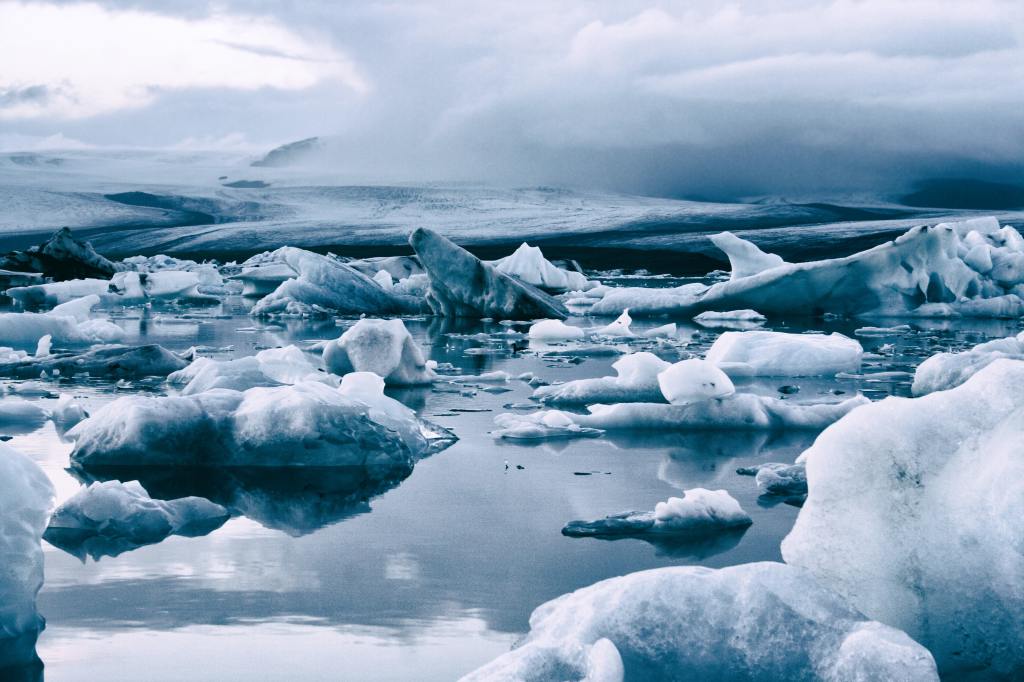
Today it is far more than three souls who are facing crisis, it is humanity. The climate of our planet is warming. We are rapidly approaching a tipping point, a potential point of no return.

Courtesy Pixabay

No doubt the previous paragraph will alienate many and make them turn away. But let us put our personal views and polarization aside for just a moment and look at this from our uniquely American perspective.

There is no doubt that the planet is warming, the atmosphere is becoming less hospitable, the oceans are becoming more acidic, and species are going extinct at an accelerated rate. Let us accept that the 2019 review of scientific papers found consensus on the cause of climate change to be 100% (papers that disagreed either contained fundamental errors or the results that could not be scientifically replicated). Let us not argue how we got here, let us simply agree that we are at a crossroad. We can then approach this problem in the old fashioned problem-solving American way rather than in the presently fashionable argumentative and polarized state of stalemate and stagnation.

Courtesy Andrea Schettino

Let us accept that there are tremendous economic gains to be had in emerging alternative energy technologies and products. Whether one believes in the virtues of alternative energy or not, there is a tremendous global demand. Wouldn’t our collective focus be better brought to bear addressing these needs and resultant markets rather than arguing the silly talking points vomited forth from dim-witted talking heads on the Boob-Tube? Why concede the opportunity to sell a product to a willing buyer? 

Let us accept the fact no matter how intelligent we believe ourselves to be, our most well-informed opinions are just that, an opinion and not necessarily fact. Let us learn to put our opinions aside and look reasonably at facts, and when necessary, defer judgement to the majority or even a theory or practice we do not understand.

In 1916 William Butterworth was the president of a corporation that manufactured agricultural implements. Horses were still the prime source of power on the farm and the emerging tractors were viewed by some as a waste of resources and a luxury rather than a necessity. “I want it plainly understood that I am and will remain opposed to our taking up the manufacture of tractors…”, Butterworth sharply proclaimed to his board of directors. In time Butterworth put his views aside and his company began manufacturing tractors. History has proven that him eventually placing trust in others rather than his own opinion turned out to be a very good business move for Deere and Company and the John Deere brand over the following century.

Now more than ever is the time for critical thinking.

Courtesy of Kelly-L

Let us accept that what makes America great is her people. Our melting pot not only welcomed the huddled masses but also tapped their collective intellect and work ethic into our uniquely American form of genius. The collection of hands and minds from every corner of the planet and of every level of education and from every walk of life produced a rich and vibrant national mindset and motivation eager to delve into the problems of the day and not only solve them but excel over the more pedestrian solutions offered by the more single-minded societies of the world. We still enjoy that intellectual vibrancy.

Let us accept science. Science is telling us that Planet Earth has warmed 1.1 degrees Celsius (1.9 degrees F) since 1880. For most of human existence the atmosphere has maintained the human-friendly “Goldilocks level” of 280 parts per million (ppm) of CO2 but that has skyrocketed to 412.5 ppm since 1960. The oceans pH levels have dropped from 8.21 to 8.1, meaning the ocean waters are now significantly more acidic. In the last 200 years species are going extinct at rates that previously took thousands of years to reach. Let us accept the overwhelming warnings of the serious scientific community that we are racing towards the tipping point away from the planet being hospitable to human existence.

Let us accept that through action and deed each can make a difference. Any contribution, whether great or small is a step in the right direction. There are also tremendous economic advantages to making that difference, as money saved in reduced energy costs and consumption, or money saved by reducing waste is money in the bank.

Let us accept our responsibility to pass forth a planet nurturing of human existence to our children and grandchildren and their children and grandchildren. We are now at the point where it is moot to argue how we got to this point. We now simply must use our uniquely American genius to solve the problems and offer forth a healthy planet to those who follow. There is also tremendous business opportunity and the opportunity for profit in our doing the right thing.

In facing this challenge, will America argue and blame and vilify and warp reality to match a particular point of view? Or will we reembrace the rather old-fashioned American way of coming together and rolling up our sleeves and working together towards the common good? The path we choose could not only be the path towards reestablishing American exceptionalism, but also the path towards America’s finest hour and the greatest achievement of saving humanity and civilization from an arduous and grueling demise.

Happy Earth Day.

       “This we know. The Earth does not belong to man, man belongs to the Earth. All things are connected like the blood that unites us all: man did not weave the web of life; he is but a strand in it. Whatever he does to the web, he does to himself.” Chief Seattle, 1852

Courtesy Pok-Rie

Will the Last Dirt Bag Out of Jackson Hole Please Turn Off the Lights?

My favorite novel is “Cannery Row” by John Steinbeck. That novel painted a vivid picture of destitute characters living their version of the good life in a rough and tumble place.

While taking my family on vacation, at first glance Cannery Row appeared exactly like the image imprinted by the words from a page from oh so long ago. It took but a few minutes to realize that the modern-day Cannery Row was an illusion and a deception. It had turned into an expensive tourist trap. Gone were the gritty canneries steadily churning the bounty of the sea into neatly canned foodstuff, her slime lines begrudgingly manned by colorful characters whose ambition and work ethic extended no further than the minimum required to purchase the next bottle of cheap wine.

While the fronts of the old Cannery buildings remained, behind those old familiar facades were expensive eateries and boutiques. The fringes of society had been replaced by beautiful people in very expensive automobiles and gawking tourists. Disillusioned by the reality of what Cannery Row now was versus what my imagination thought it should still be, my son and I wandered off away from the fabled strip.

The touristy vibe quickly melted away with each step in the opposite direction. Wandering down a weedy and junky alleyway barely a half of a mile away revealed a derelict pickup truck with no tires and up on blocks, its windshield busted out. A warm skunky plume wafted out of the windshield opening as three young men sat in the cab, doors closed, smoking a joint. I do not know where they were going in that ratty old pickup that was heading nowhere, but they renewed my shattered belief in Cannery Row.

As we age our roles in life change and even reverse. My son was embarking upon a snowboarding excursion and graciously took his old man along. It was his trip of his planning and making. I was merely along for the ride. He was going to show me his world in his way.

The first leg of the journey was spent enjoying a few lovely and leisurely days with family in the ranch country of Wyoming. Our element.

 The second leg was spent in Jackson Hole, Wyoming. His element.

From a grade school history class came my imagery of Jackson Hole as the annual wild and wooly rendezvous point for fur traders and Natives and mountain men and trappers. Later came the pop culture imagery of a dirt bag’s haven inhabited by scruffy bums in stitched up and duct taped threads looking no further ahead in life than the next gnarly day on the slopes and the hedonistic night that followed.

My son’s mind was swimming in images of world class snowboarding.

Jackson Hole is a truly fascinating place. By outward appearance it remains very western and quaint. 

But the local country boy log cabin law office is that of world-famous attorney Gerry Spence and that alone is a stunning reminder that this is indeed not your ordinary cow town. Rich folks’ jet in and buy a “cabin” the likes that would make Jim Bridger cringe at that use of the word with massive stacks of Monopoly money because they can. And because this is the place to be and be seen.

At night the clubs brim with attractively stylish and unstylishly hip partygoers. Not a single duct-taped moonboot to be seen.

Certainly, the air of a rarified atmosphere exists in town.

The dirt bag disciples of the mountain also want to be there. They work as many jobs as it takes to scrape by and quadruple up within living space designed for one because it is expensive beyond imagination to be there, and because it is their destiny to be there. Free or discounted lift passes are a cherished employee benefit and highly desirable perk. On a powder day their hard work high burnout universe is brought back into balance by a lap on public land before or in between jobs.

The bumper stickers proudly proclaim Jackson Hole to be a quaint little drinking town with a skiing problem. Realistically, Jackson Hole is a white-hot ultra-high end real estate market with a not so quaint gentrification problem.

But it seems that each of the true believers that has figured out the way to remain there and enjoy and love the Jackson Hole outdoors for what Jackson Hole outdoors really is, whether rich or poor or somewhere in between is a truly beautiful person willing to share a secret handshake that cannot be bought or sold.

From the parade of friendly folks to the pretty young woman willing to teach an old man a little tech to the exotic Italian beauty flirting cheerily in broken English to the South African pilot who brought the wisdom of the universe to bear, the mountain and her disciples had a very egalitarian feel. It could be the well-grounded hedge fund bazillionaire on one side sipping on a silo of PBR or the destitute dirt bag disciple on the other scraping pocket bottom for the next waffle and silo of PBR; everybody seemed to be feeling the same vibe 10,450’ above sea level.

Pure egalitarianism at its best.

Unless of course you happened to be talking about the Jackson Hole real estate markets. There the biggest gun will never win that knife fight but a wheelbarrow full of cash always will.

Eddie Would Go

Subtitle- Peeing Outside at 2:00 a.m.

I sometimes wondered if humans once had the same navigational abilities as migratory birds, or salmon, or the migratory mammals such as whales. Are we so far removed from that primeval existence and knowledge that such super-human abilities have long since died within us due to lack of use?

A while back there was a rather interesting conversation with a co-worker about the ancient seafarers of the Pacific. The discussion began with the Voyage of the Kon Tiki, a 1947 experiment meant to recreate possible voyages and based on the simplistic theory that the ancients simply plopped a raft into the water and hoped to eventually bump into an island.  That conversation progressed to the 1978 Voyage of the Hokule’a, in which Polynesian mariners set out in a double hulled sailing canoe to prove that the ancients could and did traverse the vast ocean without modern navigational gear.

The Voyage of the Hokule’a proved that ancient Polynesians navigated the Pacific Ocean relying solely on cues offered by the heavens above and the watery world about them.

Present on that 1978 voyage was Polynesian waterman Eddie Aikau. Eddie was the first lifeguard at Waimea Bay on the island of Oahu and is crediting with plucking hundreds of doomed souls from the unforgiving waters, never losing one on his watch. His prowess as a surfer earned him recognition as a pioneer of big wave surfing, his humble nature was the stuff that legends are made of.

When the Hokule’a began to take water, it was Eddie who volunteered to go for help, paddling away from the stricken craft never to be seen again. Perhaps the gods recognized that a being such as Eddie was best taken while in his prime and in his primal environment rather than to be left to live past the thrill of living. Eddie was only 31 years old.

Having had some close calls in the water and having the dumb luck to live and to tell about it has allowed me to reach a ripe age. Ripe enough to experience a certain ritual that occurs for most every man of a certain ripe age-being awakened out of sound sleep to urinate. For the urban dweller that would entail stumbling down the hallway in the middle of the night, but for those of us living in the woods it involves stepping outside, 365.

Each night I stumble out and if the sky is clear glance up at the stationary star Polaris and observe its nightly Beltane dance with Ursa Major and Ursa Minor. Like Groundhog Day but at night; stumble outside in the fog of half sleep, North Star, Big Dipper, Little Dipper, rotational dance, pee. Repeat the next night.

Courtesy of Wendy Wei

There was never an epiphany while gazing up at that celestial orchestration that my location was 46.42-90.23 and that it was, say, 2:00 a.m. But without having to consciously process it, while doing my business and gazing up towards the heavens above in a sleep induced fog, I knew that in, say, 2 hours and 45 minutes my alarm would go off simply by recognizing the positions of those stars.

While peeing outside at 2:00 a.m. and subliminally relearning a minute, long-lost observational skill is trivial compared to the epic and dramatic and adventurous Voyage of the Hokule’a, these middle of the night calls of nature offered a microscopic glimpse into how our absorptive minds could relearn the primeval skills we no longer use and utilize the information that nature and the universe hides in plain sight.

And thinking about the wonder of nature and the Voyage of the Hokule’a also got me thinking more about Eddie Aikau, and his measure as a man and how he might fit into today’s world given the opportunity to do so.

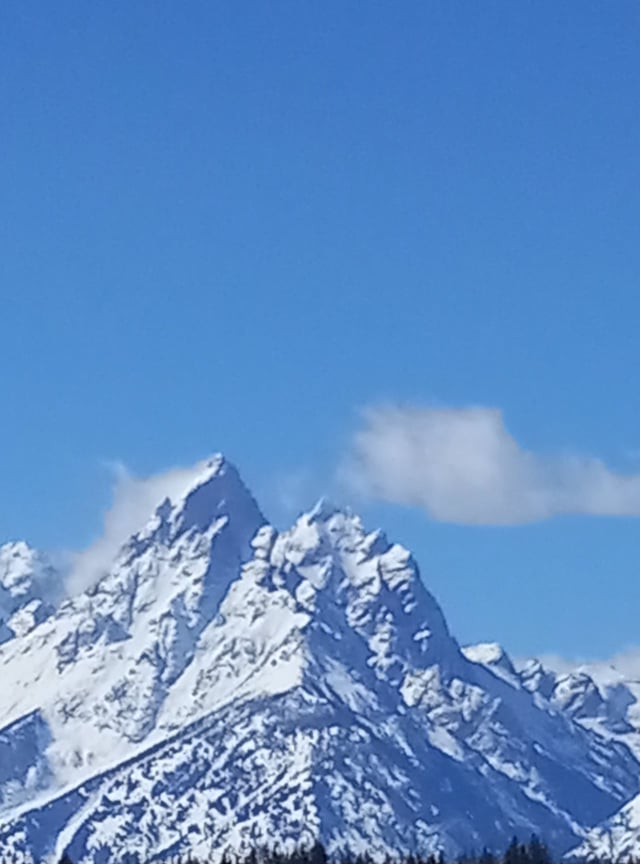
The pop culture phrase “Eddie Would Go” is based on the life of Eddie Aikau.

There are two stories of the coining of the phrase, both probably true. The second is that at the inaugural memorial Quicksilver Eddie Aikau Invitational, surfer Mark Foo reverently replied “Eddie would go” when questions arose about whether to paddle out or not.

The first had its roots in the humble Hawaiian man who lived in a shack near a Chinese graveyard and was a lifeguard at Waimea Bay. Treated as a second-class citizen owing to his pureblood Hawaiian appearance and pushed aside by a flood of wealthy tourists and vacationers, Eddie none-the-less saved the lives of some of the very people who marginalized him and were gentrifying him out of his god given homeland.

During Eddie’s watch not a soul was lost to the treacherous waters of Waimea Bay. There were no litmus tests required before his saving a life. Rich or poor, Kama’aina or Haole, kind or cruel, embracing or racist, it did not matter. A pompous bigot would be rescued just as readily as an innocent child who simply got in too deep. Over five hundred souls were saved by the humble man. By example and deed, Eddie Aikau personified bravery and dignity and the spirit of aloha.

 If there was a being in need Eddie would go.

We could use more of that today.     

Returning Home

I was employed for 106 weeks in the Arctic. The villages there are not connected by roads and every commodity and consumable item is either moved about by ice road, by barge during sealift and if on the coast, or by aircraft. Aviation is the prime mover of people as well. Air travel is the great equalizer in the Last Frontier, as all persons great or small are dependent upon it.

There is a dizzying array of aircraft laboring in the Arctic. A rarity that far north was the float plane that is ubiquitous elsewhere in the Last Frontier. But there were the occasional bush planes sporting cartoonishly large balloon tundra tires, all types of general aviation aircraft and passenger aircraft, helicopters, and of course cargo planes. Lots of cargo planes. Airplanes in the Arctic are as commonplace as pickups and dump trucks in the Lower 48.

My primary motivation to travel half-way across the hemisphere to work in such a far flung and extreme location was money, pure and simple. The pay and benefits were stellar but that flight up to report to work was a slow and painful uprooting. It involved a myriad of shuttles and flights and layovers and usually took a very torturous 36 hours.

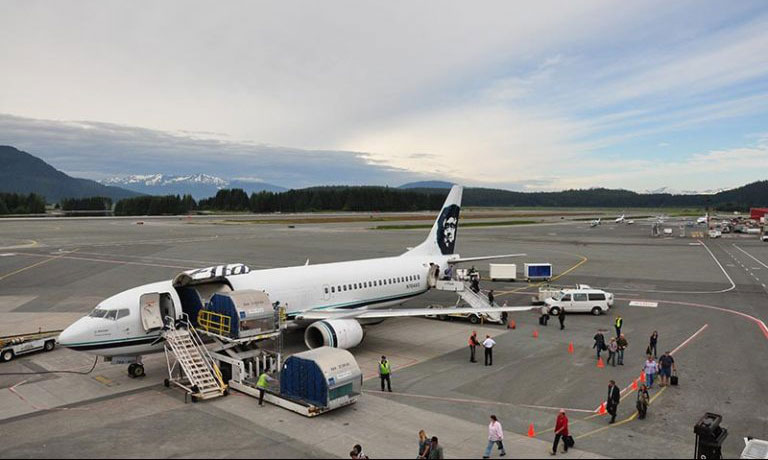
The final leg of that journey up was in the rear of a combi-cargo plane. As the name implies, the front of the aircraft was loaded from a garage door size forward cargo door with igloo shaped cargo pods that fit perfectly within the profile of the fuselage while us passengers were seated behind a bulkhead in the rear. The heavy realization that one had been torn from the comfort of hearth and home always occurred on that final leg. Once airborne out of Anchorage, the landing gear would retract into the gut of the combi-cargo with a sickening thump, a sullen punctuation that there was no turning back.

A combi-cargo. In the villages the pods were loaded with front end loaders rather than the elevator system depicted. Note the passengers departing on the tarmac as the cargo pods are loaded. Photo courtesy of Alaska Airlines.

The familiar Lower 48 sights of water and forests and mountains slowly disappeared in the wake of the combi-cargo and were replaced by the alien by midwestern standards images of the treeless tundra dotted with bizarre Arctic polygons and the equally alien site of the ever-reaching tentacles of the crude oil pipelines.

Once the boots were on the ground in Deadhorse/Prudhoe Bay, my plan was to do everything that could possibly be done to stay busy, which lessened the sting of being away from home. There was the normal 12-hour workday seven days per week. During sealift vehicles were convoyed from the end of the Haul Road to the West Dock for barge shipment on the Beaufort Sea to the coastal villages. There was always the need for a quadra-van or bus driver after hours. There were often after hour breakdowns, projects, and emergencies. During the very short Arctic summer, various camps hosted 5k fun walk/runs. There was no time for boredom, as boredom was the gateway to homesickness.

At work 3623.3 miles away from home.

Just as the combi-cargo plane came to represent that disemboweling feeling of being uprooted and torn away on the journey up to the Arctic, it came to represent repatriation with the people and place that I loved once the time came to rotate out.

It was invigorating to feel “wheels up” as the landing gear thumped into the wheel wells and the combi-cargo climbed out of Deadhorse. There was no turning back and in 36 short hours I would be home! However, there was always a brief stop in Barrow (now renamed Utqiagvik) to drop off and pick up passengers as well as unload cargo, but that was a very small inconvenience. Heck, Barrow was a mere 35 ½ hours from home!

On an otherwise routine flight out of Deadhorse an old Inupiat man was seated at the window and a slightly more than middle aged woman was at his side in the middle seat. Mine was the aisle seat.

The woman glanced at me as I took my seat. She seemed more urban. “Your dad?”, I asked, nodding towards the old man. I was bursting with curiosity and wanted to strike up a conversation. “Coming home from the hospital”, she replied curtly before returning her attention to him.

He was old and frail. His hands were gnarled and almost skeletal, contorted by a lifetime of hard work and bitter cold. Was he a fisherman? A whaler? A hunter? He was withered and bent over but still appeared larger than life. He spoke with barely a breathy whisper so I could not overhear his conversation with the woman and could draw no clues.

“Would he like the aisle seat?”, I asked, as that would give the old man much more space.

“He seldom flies and likes the window”, she replied with a forced smile before turning back to him. It was clear that she just wanted to get this journey over with and I did not want to be the chatty pest in the next seat. The combi-cargo raced down the Deadhorse runaway then climbed into the sky.

Goodness! What was this extraordinary man’s back story? Had he faced a David versus Goliath medical experience and conquered the dreaded foe trying to rob him of his remaining days? Was he now triumphantly returning home to live out those hard-earned days? Had he received the worst news of his life and was he now stoically making one last journey home to meet his maker? Would he and the other elders of the village gather and relive old adventures? Would he hold court with the children of his village and tell them wonderful and larger than life stories about a life well lived? I was beside myself with curiosity but remained respectful.

He and she chatted quietly.

On the flight from Deadhorse to Barrow/Utqiagvik, it seemed the combi-cargo barely gets up to altitude and then cruising speed before it must begin its descent. Upon descent the old man was pasted to the window. As the aircraft glided into the final approach it broke out below the clouds and the village appeared. “Barrow!”, the old man proclaimed with an almost seal-like bark. He turned away from the window and beamed at his daughter with a child-like grin. “Home”, the woman said softly.

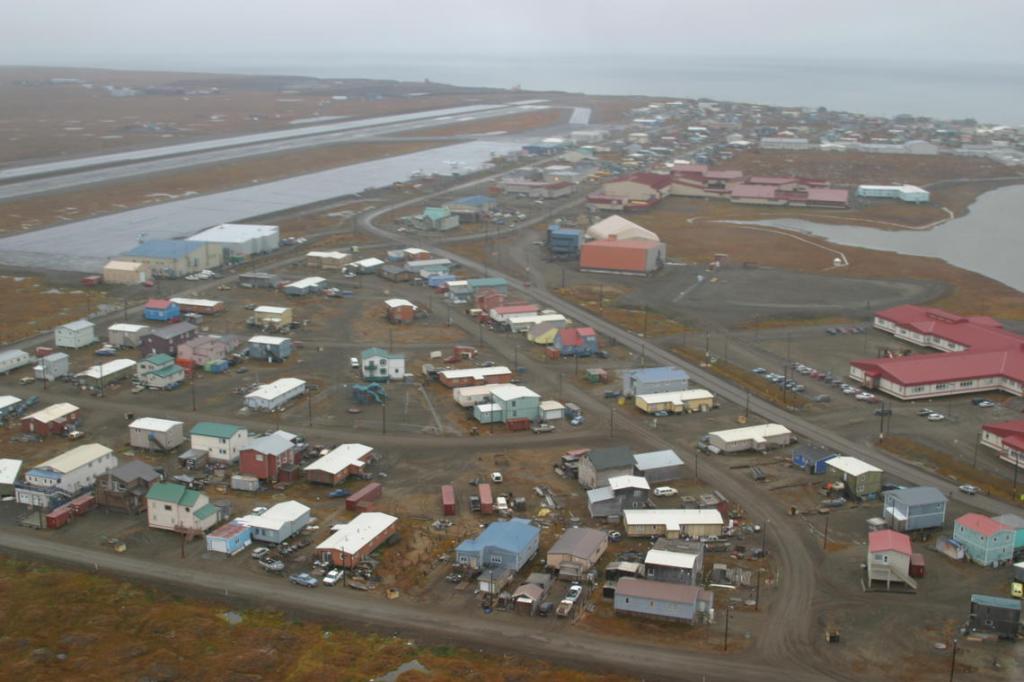
Formerly known as Barrow, now known as Utqiagvik. Photo courtesy of the USGS.

There is no jet way in Barrow and normally when a combi-cargo lands, the loadmasters spring into action and front-end loaders jostle and bounce the massive aircraft while forking the cargo pods, all before the ground crew even has the chance to position the rolling stairs up to the passenger exit.

But this day was different. There was no hustle and bustle outside of the aircraft, no frantic loadmasters and ground crews scampering about performing their usual high octane, labor-intensive ballet in the brutal sub-zero cold. The old man was too frail to traverse the rolling stairway to the ground. A lone front-end loader reverently approached with an empty cargo pod then raised it up to the passenger exit.  The old man gingerly stepped from the aircraft into the cargo pod with his daughter at his side and was lowered to the ground. Once on the ground she lovingly walked away with him, their arms locked.

There is a lot to be said about returning home.

No sooner had they disappeared into the Alaska Air terminal did the organized chaos begin and front-end loaders and loadmasters and ground crews sprang into action and the plane jostled and bounced as cargo was unloaded and passengers departed and climbed aboard the rolling stairs.

I too was returning home.

NOT a combi-cargo but this photo pretty much depicts most Lower 48 folks’ mind’s eye image of flying around the arctic in a cargo plane. As long as we are talking about extreme places and cargo planes, this is simply too cool of an image not to include! Photo is of a Basler BT-67 (a product of Wisconsin) taken during a salvage mission in Antarctica. Courtesy of BT-67 pilot and Antarctica adventurer Paul Votava.

Returning Home

I was employed for 106 weeks in the Arctic. The villages there are not connected by roads and every commodity and consumable item is either moved about by ice road, by barge during sealift if on the coast, or by aircraft. Aviation is the prime mover of people as well. Air travel is the great equalizer in the Last Frontier, as all persons great or small are dependent upon it.

There is a dizzying array of aircraft laboring in the Arctic. A rarity that far north was the float plane that is ubiquitous elsewhere in the Last Frontier. But there were the occasional bush planes sporting cartoonishly large balloon tundra tires, all types of general aviation aircraft and passenger aircraft, helicopters, and of course cargo planes. Lots of cargo planes. Airplanes in the Arctic are as commonplace as pickups and dump trucks in the Lower 48.

My primary motivation to travel half-way across the hemisphere to work in such a far flung and extreme location was money, pure and simple. The pay and benefits were stellar but that flight up to report to work was a slow and painful uprooting. It involved a myriad of shuttles and flights and layovers and usually took a very torturous 36 hours.

The final leg of that journey up was in the rear of a combi-cargo plane. As the name implies, the front of the aircraft was loaded from a garage door size forward cargo door with igloo shaped cargo pods that fit perfectly within the profile of the fuselage while us passengers were seated behind a bulkhead in the rear. The heavy realization that one had been torn from the comfort of hearth and home always occurred on that final leg. Once airborne out of Anchorage, the landing gear would retract into the gut of the combi-cargo with a sickening thump, a sullen punctuation that there was no turning back.

A combi-cargo. In the villages the pods were loaded with front end loaders rather than the elevator system depicted. Note the passengers departing on the tarmac as the cargo pods are loaded. Photo courtesy of Alaska Airlines.

The familiar sites of water and forests and mountains slowly disappeared in the wake of the combi-cargo and were replaced by the alien by midwestern standards images of the treeless tundra dotted with bizarre Arctic polygons and the equally alien site of the ever-reaching tentacles of the crude oil pipelines.

Once the boots were on the ground in Deadhorse/Prudhoe Bay, my plan was to do everything that could possibly be done to stay busy, which lessened the sting of being away from home. There was the normal 12-hour workday seven days per week. During sealift vehicles were convoyed from the end of the Haul Road to the North Dock for barge shipment on the Beaufort Sea to the coastal villages. There was always the need for a quadra-van or bus driver after hours. There were often after hour breakdowns, projects, and emergencies. During the very short Arctic summer, various camps hosted 5k fun walk/runs. There was no time for boredom, as boredom was the gateway to homesickness.

At work 3623.3 miles away from home.

Just as the combi-cargo plane came to represent that disemboweling feeling of being uprooted and torn away on the journey up to the Arctic, it came to represent repatriation with the people and place that I loved once the time came to rotate out.

It was invigorating to feel “wheels up” as the landing gear thumped into the wheel wells and the combi-cargo climbed out of Deadhorse. There was no turning back and in 36 short hours I would be home! However, there was always a brief stop in Barrow (now renamed Utqiagvik) to drop off and pick up passengers as well as unload cargo, but that was a very small inconvenience. Heck, Barrow was a mere 35 ½ hours from home!

On an otherwise routine flight out of Deadhorse an old Inupiat man was seated at the window and a slightly more than middle aged woman was at his side in the middle seat. Mine was the aisle seat.

The woman glanced at me as I took my seat. She seemed more urban. “Your dad?”, I asked, nodding towards the old man. I was bursting with curiosity and wanted to strike up a conversation. “Coming home from the hospital”, she replied curtly before returning her attention to him.

He was old and frail. His hands were gnarled and almost skeletal, contorted by a lifetime of hard work and bitter cold. Was he a fisherman? A whaler? A hunter? He appeared larger than life. He spoke with barely a breathy whisper so I could not overhear his conversation with the woman and could draw no clues.

“Would he like the aisle seat?”, I asked, as that would give the old man much more space.

“He seldom flies and likes the window”, she replied with a forced smile before turning back to him. It was clear that she just wanted to get this journey over with and I did not want to be the chatty pest in the next seat. The combi-cargo raced down the Deadhorse runaway then climbed into the sky.

Goodness! What was this extraordinary man’s back story? Had he faced a David versus Goliath medical experience and conquered the dreaded foe trying to rob him of his remaining days? Was he now triumphantly returning home to live out those hard-earned days? Had he received the worst news of his life and was he now stoically making one last journey home to meet his maker? Would he and the other elders of the village gather and relive old adventures? Would he hold court with the children of his village and tell them wonderful and larger than life stories about a life well lived? I was beside myself with curiosity but remained respectful.

He and she chatted quietly.

On the flight from Deadhorse to Barrow/Utqiagvik, it seemed the combi-cargo barely gets up to altitude and then cruising speed before it must begin its descent. Upon descent the old man was pasted to the window. As the aircraft glided into the final approach it broke out below the clouds and the village appeared. “Barrow!”, the old man proclaimed with an almost seal-like bark. He turned away from the window and beamed at his daughter with a child-like grin. “Home”, the woman said softly.

Formerly known as Barrow, now known as Utqiagvik. Photo courtesy of the USGS.

There is no jet way in Barrow and normally when a combi-cargo lands, the loadmasters spring into action and front-end loaders jostle and bounce the massive aircraft while forking the cargo pods, all before the ground crew even has the chance to position the rolling stairs up to the passenger exit.

But this day was different. There was no hustle and bustle outside of the aircraft, no frantic loadmasters and ground crews scampering about performing their usual high octane, labor-intensive ballet in the brutal sub-zero cold. The old man was too frail to traverse the rolling stairway to the ground. A lone front-end loader reverently approached with an empty cargo pod then raised it up to the passenger exit.  The old man gingerly stepped from the aircraft into the cargo pod with his daughter at his side and was lowered to the ground. Once on the ground she lovingly walked away with him, their arms locked.

There is a lot to be said about returning home.

No sooner had they disappeared into the Alaska Air terminal did the organized chaos begin and front-end loaders and loadmasters and ground crews sprang into action and the plane jostled and bounced as cargo was unloaded and passengers departed and climbed aboard the rolling stairs.

I too was returning home.

NOT a combi-cargo but this photo pretty much depicts most Lower 48 folks’ mind’s eye image of flying around the arctic in a cargo plane. As long as we are talking about extreme places and cargo planes, this is simply too cool of an image not to include! Photo is of a Basler BT-67 (a product of Wisconsin) taken during a salvage mission in Antarctica. Courtesy of BT-67 pilot and Antarctica adventurer Paul Votava.

Falling Down

I am a shy, anxious person. I was as a kid and probably still will be the day I die.

This blog has been very therapeutic. This blog is a tremendous ice breaker. The comments and outreach and kind words from friends and readers are priceless.

Coming from a hardworking and industrious successful family, it appeared to me that the only way to make it through life was to power through everything. Work harder. Push through the times of self-doubt. The only problem with working harder to get through things is that one pushes themselves further away from their worst fears rather than facing them head on.

This past year came the vow to quit forcing things and step outside of the comfort zone. Why be shy? Why be anxious? Why fear rejection?

The stories on the blog seemed the perfect avenue. The reception of “The Cousin Eddie Camper” was incredible. A plan was hatched to step way outside of the comfort zone and go open mike and tell that story before a live audience.

However, old habits are hard to break and coming from hard working and industrious successful stock, getting up on stage at a local coffee shop or bar with six or seven people in the crowd just wouldn’t do. Living off-the-grid my main source of outside entertainment is radio, and public radio has a wonderful storytelling hour. I vowed to appear on that stage hosted by that national organization that feeds into that nationwide radio broadcast. Go big or go home. It takes a mighty sword to slay demons.

“The Cousin Eddie Camper” story was honed down to the required time limit. I enlisted my sister’s professional help in public speaking and then labored for weeks reading the story before my reflection in the patio door. Every word was carefully recited, every pause carefully thought out, every inflection carefully placed for maximum drama.

Driving from a back country trail side cabin in the snowbelt down to a venue in the shadow of the State Capital in Madison to tell that story was about as far outside of the comfort zone as one could possibly get. Despite that, I went up on stage. The white-hot stage lights beamed upon me, but it was dark over the audience. I could hear and feel them but could not see them. The telling of that story received the highest score for the night and won the storytelling competition. Mission accomplished. My confidence surged.

That surge in confidence coincidentally helped me out a few weeks later at an opportune time with a long-range project at work, but deep inside I was still shy and anxious and feared rejection. The core issues remained.

One of my later blog posts was much more personal. It tells the story of standing before fate bare and hand in hand with an unlikely love, only to realize that fate had other ideas. A decision wsas made to return to Madison to tell that story. The crowd would love it, victory would once again be mine, and inevitably my worst fears and insecurities would magically disappear. True to fashion, the story was rehearsed and edited and parsed to perfection, even though there were second thoughts about even telling it.

The host that night was a well-known personality from a cable comedy network, which was somewhat intimidating.

My name was drawn to go up on stage and tell the story. The lighting was a little different and everybody in the audience from the front row to back of the mezzanine could be seen.

The story began well, and while exhaling came easy, inhaling did not. Once out of air, my mouth moved but no sounds exited. Stage fright! I managed a gasp and apologized to the audience. Anxiety! The lights got hotter. The next word escaped me. What the hell was that next word? Panic! A massive vise crushed my chest while another squeezed my head. It physically hurt to be up on that stage. My ears rang and the universe seemed to implode. Was I having both a stroke and a heart attack in front of a live audience?

A kind woman’s voice from the audience said something about hearing the rest of the story. A man’s voice shouted, “you can do this, man!”, and it then occurred to me that perhaps I could. The first step was to breath, which had been simply forgotten. It was a very wobbly restart, trying to continue the story, trying to breath, and what was that next damn word? The continuance of the story had no rhythm or rises or falls or pauses. But none-the-less, that story was a very human story, and the audience leaned into those very human portions despite my delivery being very panicked and mechanical.

At the end of the story the audience applauded warmly. I wanted to tell the producer that my score should be zero, as this was a story telling hour and my telling of this story was a miserable fail, but instead simply exited the stage, humiliated.

After the show about a dozen people offered kind words.

One young woman said how much she enjoyed the story. I mumbled something about being shy and nervous and apologized for such a poor telling. “It made me cry”, she said.

With both hands she reached out and clasped one of mine tightly and drew in closer. By outward appearance I judged her as having never been cast aside. She was attractive and stunning and exotic and could certainly bring any lover to their knees with a mere a snap of her finger, such was her beauty. How could anyone dismiss a creature so beautiful? How could she relate to this story? Her eyes were dark and misty and for just a fleeting moment offered a glimpse deep into her soul. It was clear that she too had stood before fate bare and hand in hand with one that she loved, and fate had different ideas for her as well.

“It was a beautiful story”, she said softly and then walked away.

There is no joy in lost love. Failing, coming up short, not delivering a best effort, or not even trying will always be unpleasant and will never be fun. But in that fleeting moment a soulful young woman taught an old man a long overdue lesson in the commonality of the human experience and the dignity in getting back up after falling down.

Bless her.

At What Cost?

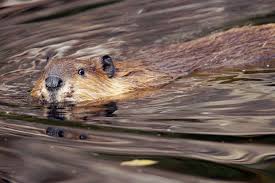
The humble beaver does some pretty amazing things for their neighbors.

First and foremost, they build their dam and create a pond to suit their own needs. That pond is an environment, a food source, a defense, and an aquatic transportation system for the beaver colony. While it exists, the pond is not only a haven for its maker, but also for almost all woodland species from muskrats to wood ducks and redwing blackbirds. After the dam bursts, grasses and sedges sprout from the mud, further nurturing the biodiversity. Later yet, willow and aspen whips will lead the transition back to woodlands. Thirty years or more later, the beaver might return to favorable conditions and will again start a new life cycle with a newer beaver pond.

Clearly the positive effects on biodiversity over the entire course of the lifecycle of the beaver pond and its subsequent demise more than offset the beaver’s alterations and consumption while inhabiting the pond.   

The beaver gives back more than is taken, when measured over time.

Humans, not so much.

Throughout the history of life on this planet there has been balance. Predators and prey and grazers and forage have generally stayed in proportion. There are surges and implosions to be sure but measured over time there has been consistent balance.

It is thought that the habit of early hominids to kill the largest and most lumbering creatures then leisurely feed off the carcass created the beginnings of socialization and its resultant increase in brain size. As the brain size increased for our ancestors the tools and methods of hunting became more efficient. Rather than becoming more physically efficient, such as the cheetah’s evolutionary ability run at ever greater speeds, humans simply raised their rates of consumption and became more efficient at aggregating that which was to be consumed.

Soon our large brains and opposable thumbs gave us a level of dominance over the environment where there was no longer a dark fear of becoming a snack for a lurking predator. That is not a bad thing. But our consumptive habits are affecting most every plant and animal species around us in negative ways. And that begs the question, can a human live a less consumptive life? Can we be more like the beaver and give more back than we take?

It just so happens that the minimalist lifestyle I have engaged in is the perfect Petri dish for just such an experiment and comparison. There is also access to very good data on the contrasting lifestyles.

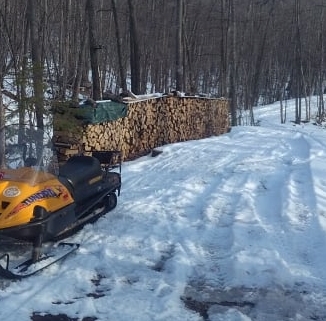
All-natural carbon neutral heating fuel

The short answer is that yes, a human can live a comfortable life with a dramatically smaller footprint.

By comparing an off-grid cabin with a more traditional on the grid home, each located barely a mile apart and within the same microclimate, a very dramatic conclusion can be drawn. The carbon footprint of living off-grid is 17% of the on-grid lifestyle. Water consumption is 10% in the off-grid cabin. Land fill waste for the cabin is about 1/13 of that of a normal household in Wisconsin.

So, can getting lost in the forest and living an off-grid lifestyle save the planet if done on a large scale? Probably not, as there are a lot of people on the planet and only so much land for us to fan out upon.

But worthy of note is that environmentally sound habits can be adopted by anybody living anywhere. These good habits and efficiencies also pay financial dividends. None of us would take a stack of hundred-dollar bills and light them on fire, but that is exactly what we are doing when we unnecessarily waste energy, water, over consume, or create excessive garbage.  

But can we truly be like the beaver and give back more than we take? Probably not, at least not without huge lifestyle adjustments. But perhaps we can do a better job reducing the negative impacts we have created.

Part Two:

For those of you who like to geek out on comparisons, here we go!

What follows is not meant to be a scientific treatise of living off the grid nor is it a political statement, it is merely a compilation of my experience. As such there is a certain amount of latitude. For example, the carbon footprint of producing carbon neutral firewood is included in the statistics for the simple reason that I was curious what it might be. (The overall carbon footprint of the propane consumed, however, is absent and only the BTU value of the propane that exists within my propane tank and then consumed is represented, as it is nearly impossible for a mere mortal non-brainiac layman to calculate the BTU investment into the production of a BTU of propane fuel). Hydrocarbon exploration, production, refinement, and transport all require a certain amount of energy input, just as the production and distribution of biomass fuels such as firewood requires a certain amount of energy input.

The traditional on-grid example presented is a three-bedroom energy Code compliant dwelling occupied by two persons and located in the extreme Snowbelt region of Northern Wisconsin. Heat is provided by a natural gas fired boiler feeding in-floor heat. Electricity is provided by a traditional on the grid utility service provider.

The off-grid example is a single bedroom energy Code compliant cabin located about one mile away from the on-grid example. Heat is provided by a wood stove fueled by waste timber from onsite. Lighting, cooking, and refrigeration are fueled by propane. A gasoline fueled generator occasionally is used to recharge batteries or to power a seldom used small microwave oven. A cell phone provides communication and a hotspot for a laptop computer, both of which are recharged almost exclusively by power sources in a Ford Ranger pickup truck.

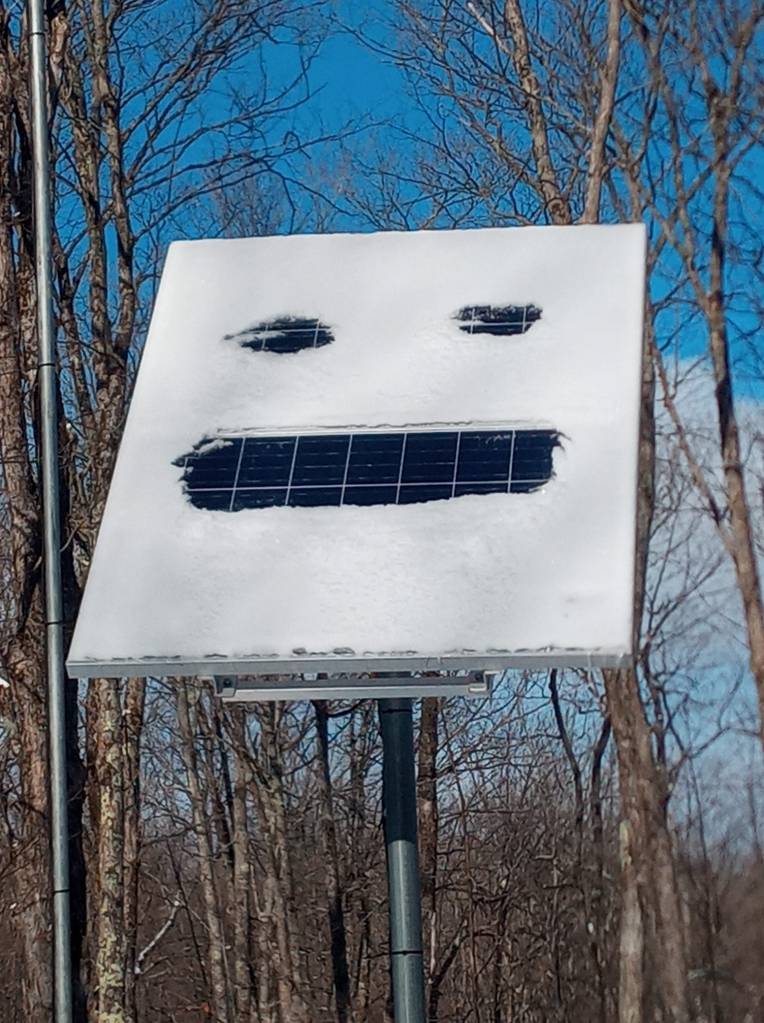
Currently the sauna is electrified by solar panels with very good results.

All energy sources, whether hydrocarbon, electrical, or biomass have been converted into British Thermal Units (BTU) for apples-to-apples comparison. (It is impossible to know just what percentage of the on-grid example electricity is produced by carbon neutral means such as hydro-electric, wind, solar, or biomass fueled, so it will be presumed to be generated by the reasonable assumption that 80% is fossil fuel generated).

First up, the compilations for the traditional on-grid home. This includes the energy for all aspects of domestic life such as heat, lighting, cooking, bathing, clothes washing, etc.

Annual electrical consumption                                                     22,651,163 BTU

Annual natural gas consumption                                                107,830,715 BTU

Total annual household energy consumption                         130,481,878 BTU

Minus presumed carbon neutral electricity production(20%) -4,530,232 BTU

Total annual carbon footprint for traditional home               125,951,646 BTU

This specific household consumed 22,000 gallons of water per year, far less than the Wisconsin design flow estimates of 36,500 gallons per year. Additionally, the average Wisconsin household generates 1,779 pounds-just short of one ton-per year of land fill waste.

Next, the off-grid cabin.

Propane for lighting, cooking, and refrigeration                    17,375,880 BTU

Gasoline for generator                                                                  1,413,146 BTU

Firewood production, (gasoline and diesel fuel)                         842,002 BTU

BTU equivalent of laundromat electricity (estimated)            1,144,000 BTU

Total annual carbon footprint for off grid home                    20,775,028 BTU

By carefully purchasing products based upon packaging and the ability to recycle, annual landfill waste output was 39 cubic feet and weighed 127 pounds.

Annual water consumption for sauna, bathing and dishwashing was 884 gallons per year, water harvested from an artesian well as drinking and cooking water was 274 gallons per year, and the estimated water consumption at the laundromat was 1170 gallons per year; for an annual total water consumption of 2,328 gallons per year.

The statistics for heating the off-grid cabin with firewood are:

11 Fireplace cords of mixed hardwood                                     88,000,000 BTU

Hydrocarbons consumed in firewood production                         842,002 BTU

Net carbon neutral consumption for cabin heat                      87,158,000 BTU

Note that as the firewood is carbon neutral, and has had the hydrocarbon footprint subtracted, it does not apply towards the overall carbon footprint of the off-grid lifestyle. The harvesting of firewood also is great exercise and helps keep me healthy and happy.

By burning firewood, one must think forward not just a moment or day or a week, but an entire year or more. To ensure an adequate source of heat, the firewood must be cut and seasoned at least an entire year in advance. It is easier to dial a thermostat and have the instant gratification of the perfect temperature magically happen, but at what cost?

It is a major lifestyle commitment to go off-grid. It is more work to carefully cook your next meal from staples rather than eat out or impatiently stare at a microwave oven that is harshly nuking your next prepackaged meal. Living on the grid can be easier. But at what cost?

The Trek Rat Bike

There were twin sisters. Mark was in love with one and I was married to the other, so I suppose my becoming his friend was initially as part of a package deal.

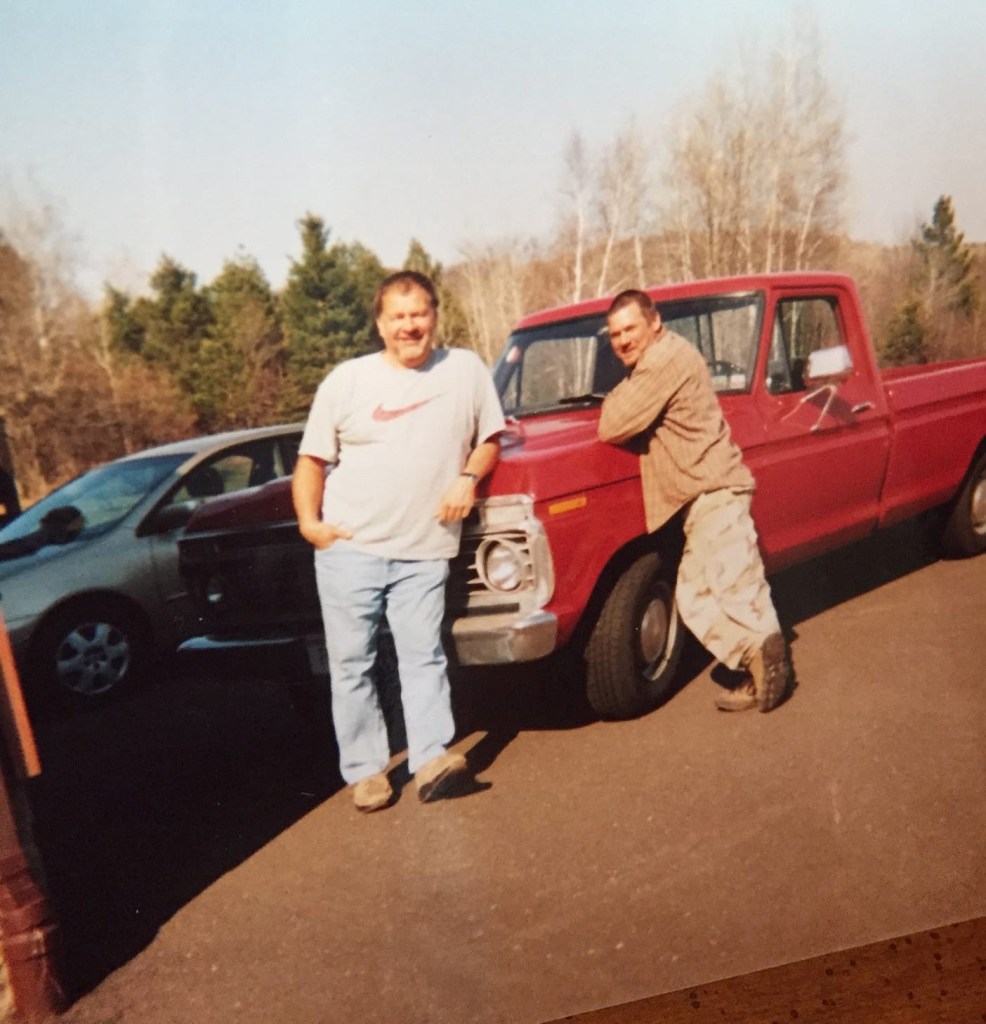
Two good old boys ca. 2009

In any other scenario, Mark and I would probably be unlikely to become friends. He was popular and gregarious and outgoing and loved being around people. I, on the other hand am quite shy and am somewhat of a home body. Our paths would have been unlikely to cross if not for the twin sisters.

If Mark were among a group of folks circled about having fun, his charisma, impish toothy grin and infectious laugh would gravitationally draw him in towards the center. He was one of those rare individuals that could easily move from one circle into another and be perfectly comfortable and at ease, as well as be accepted and embraced.

He had no single circle or class that defined him, indeed, those around him more often than not became defined as being “Mark’s buddy”. A lifelong passion of his was pheasant hunting in North Dakota, and his hunting buddies ranged from plowboys to the circuit court judge. It was the outdoors and ski hills that drew him to the Northwoods as a young man and he shared a kinship with ski bums, adventurers, outdoors people, and timber tramps from every walk of life.

Had that been as far as his drive went, he would simply join the ranks of the many other charismatic outliers that the Northwoods seems to breed and attract. But Mark had ambitions and became a businessman, and a very successful businessman at that. The business was built upon the outdoors, as that is what he knew and loved. His inane understanding of human nature and genuine affability made him a natural salesman and an engaging style made the process of buying fun for his customers. Sales were his artform. And his business expanded his presence to folks in every corner of the community.

He built the business to sustain himself and his family so obviously being successful was of the utmost importance. But after hours he was quick to buy a drink and catch up with customers not seen in a while, not to draw them back into the store, but because he genuinely was interested in what was going on in their lives.  

He was also acutely aware that a successful business yielded a stable source of fun coupons that allowed him to live a life that most never could. Mark was always traveling or dreaming of the next adventure, and often that was a romantic getaway to a place of wonder with his chosen twin. One solo trip was to the Sturgis Rally, which was a staple event for him.  That same week, I and my chosen twin went to Hot August Nights, accompanied by his chosen twin. He became terribly heartsick by midweek and drove his motorcycle for 16 hours straight in triple digit heat from Sturgis, South Dakota through Wyoming, Utah, and Nevada to join up with his chosen twin in Reno.    

A good example of Mark’s understanding of the human calculus was when I began pondering getting back into cycling. He knew I would never spend a lot of money on a shiny new bike, would like to get a good deal but would not dicker, and researched everything to the nth degree on the then new Internet. “I’ve got a 12-year-old Trek 800 mountain bike trade in”, he said. “It books for $55 but you can have it for $50”.

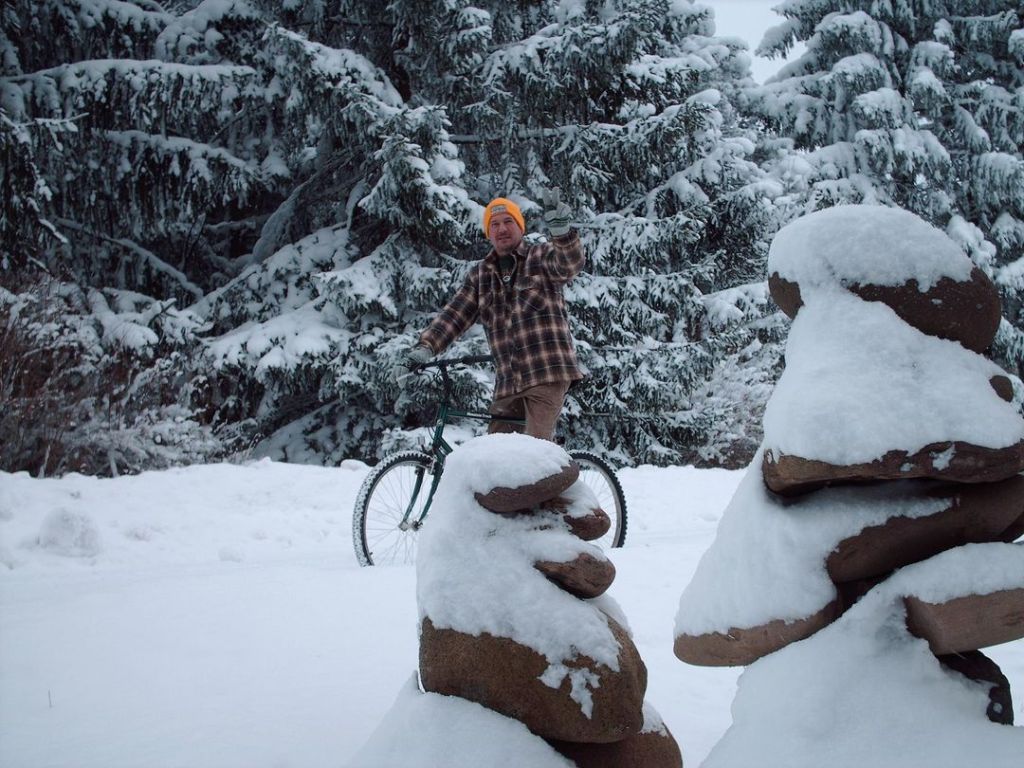
The Trek Rat Bike in the snow

The book price was spot on and getting a 10% discount with no dickering was just too sweet to pass up. After handing over a half of a hondo, I was pedaling around on a Trek just like Lance!

One of the cables eventually broke. “No charge”, his employee said. When I told Mark about this later, he said that it had nothing to do with the fact that he was in love with the other twin sister but that it was simply good customer service. “But you know bikes have come a long way”, he added. “When you are ready to try something a little nicer, come on in and we will take care of you”.

I rode the heck out of that old bike and the shiny emerald-green paint began to take on a ratty patina, the teeth on the cassette could use dentures, and all the cables must have been secretly taking Viagra. The lustrous Trek slowly morphed into the Trek Rat Bike.

Then Mark suddenly and tragically left us.

Life, however, is for the living and time marches on. But every ride on the Trek Rat Bike brings back old memories and is a pleasant reminder of some very happy times. That bike has attained keepsake status. It has become the last tangible link to a departed friend, a talisman.  But it is now nearly 30 years old and is simply worn out. I tried for the longest time but could not stand the thought of replacing it, which probably made Mark the Salesman roll over in his grave.

After much soul searching and a realistic assessment of the Trek Rat Bike, the decision was made to get a new bike. But with the pandemic related supply chain issues there were none to be had at that time at Mark’s store. “If you can find one anywhere buy it”, his son, now the proprietor, said. A no-name bike was eventually located and purchased from a big-box retailer. The Trek Rat Bike was relegated to number two status.

The old and the new

The no-name bike is nice, but it is no Trek Rat Bike. Then right out of the box there was a defect. After countless emails then hours spent on an 800 number before finally speaking to live human being, it became apparent that the big box store viewed me as a nefarious international cabal intent on fleecing them for a left side pedal. Maybe this would have had worked out better if someone from the big-box warranty department had a love interest in the other twin sister.

The no-name bike will inevitably wear out quickly and will be relegated to the trash heap. The supply chain issues are beginning to be ironed out and the local bike shop will be able to take care of me. But no matter how many bikes are in the stable, they will share that stable with the Trek Rat Bike. I do not need that token reminder of a friendship, but it is sure nice having it.

Godspeed, Mark.

Courtesy Sam Davey III