Hookers and Rough Necks and Drunks, Oh My!

At the peak of the frack boom Williston, North Dakota, was the only small town in the world where one could get hired and make more money in the first week than most make in two months, get fall-down drunk, score a sweet drug deal only to be later torched on one gone bad, lose the money, get fired and then rehired, and get killed and stuffed into a dumpster, all in the same week. Two of those things happened to me and the others were stories heard during my first week in Williston.

For most of its life Williston was a sleepy Cowtown and the population hovered at about 13,000 good, salt of the earth type folks. In the past, there had been sporadic flirtations with oil booms and busts. But the rapid advancement in hydrofracking technology suddenly made the extraction of the tight crude locked into the Bakken Formation extremely profitable and the sleepy Cowtown blew up into Boomtown! The population swelled to an official count of 25,000 but was probably much higher. It was impossible to count those living in cars and campers, in tents in parks or out on the range, the clever guy who lived over a year under the tonneau cover of his mini pickup and stayed one step ahead of the Law by retiring to a different parking spot each night, those in temporary work camps, or the hot sheeters.
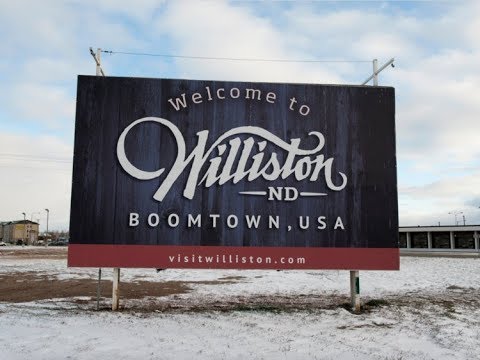
For those who don’t know, hot sheeting is the practice of subletting out one’s bed while away at work, or with company provided housing, the assignment of one bed to two workers on opposing shifts. I lived in a hot sheeting arrangement for a few weeks and asked the supervisor what would happen if weather or illness prevented one from going to work when another was returning and scheduled for the same mattress. She replied that it would be advantageous to know how to sleep standing up.

But it was an exciting place to be! As the newbies were introduced, the coordinators would ask what their motivation for being there was. No jobs back home, more money, dying industries, layoffs were common responses. “Adventure!”, I replied lustily when asked. A favorite way for the old hands to pass the time was to try to torment the newbies into quitting on their first day, but I made it to day two.

As is often the case with adventure and lust, later there comes a time for a reality check and Williston was no different. Apartment rents were higher than in Manhattan, so if a job did not have company provided housing, it might make better economic sense to take a minimum wage job back home. A human life seemed to be just a little less valuable. The initial sensory overload and the excitement and novelty of Boomtown was slowly replaced by loneliness, boredom, and all sorts of self-destructive behavior.

A coordinator had a birthday party held at a dank and often violent, but very popular local venue. A few of us were not terribly excited about that party. So, we did what bored and cynical people do in such instances; we sat at the bar and drank way too much while impatiently waited for others to start leaving so we could do the same.

The conversation at the bar that night devolved into a theory that when the weather turned cold, the local prostitutes would begin to ply their trade from the warm and friendly aisles of the local big box mega-mart store. “I go there to walk for exercise when the weather is bad and have never seen any prostitutes!”, I replied in disbelief to my buddy. “It’s not like they announce over the PA system that there is a blue light special on hookers in aisle nine, dumbass!”, he retorted.

We argued for a few more minutes, then he pointed out two rather comely women across the room. “They are prostitutes”, he stated matter of fact. The young women were rather plainly dressed and did not fit my stereotypical fishnet stockings and way too much makeup image of what a prostitute should look like. “They look like kindergarten teachers”, I replied.

“The drinks, look at their drinks”, he exclaimed. “They have been here as long as we have, and they still haven’t taken a sip from their first drink!” We had finished our first drinks many, many drinks ago so that made some sense. We continued to argue about prostitutes and big box stores, and I occasionally glanced their way. Indeed, each maintained an un-sipped full glass in hand. Whatever they were doing there, it wasn’t drinking.

When coming out of the men’s room, the two young women were waiting to get into the lady’s room. “Are you girls by chance working?”, I blurted out awkwardly, then braced myself for the inevitable slap across the face. But the slap never was delivered. Instead, one of the ladies recited the various services offered, the price points, and the two-fer package details with such clarity and alacrity that it made my glasses fog.

“I’m…I’m married, not for me… for him, it’s his birthday”, I stuttered and pointed towards the coordinator, who was out there on the dance floor trying to get the party started but without many takers. The girls looked at him then shrugged and pondered, then nodded approvingly. “No… no, nothing like that!”, I blurted. “He’s married too. Just dance with him for a while”. And dance with him they did.

There may be some statutes of limitations and the less that the Williston vice squad knows the better, so I will neither confirm nor deny whether there was a financial transaction. And the coordinator sure seemed to enjoy the two comely young ladies that appeared out of nowhere and lavished him with good old-fashioned PG-13 attention on the dance floor on his birthday. Besides, it was all no-harm, no foul, no unlawful carnal knowledge, and nothing to clean up after the not-so-dirty-deed was done. And I begrudgingly admitted to my friend that he was right.

I do not know for certain if there is a St. Peter. If he exists, over the eons he has no doubt heard millions of souls piously report the billions of Hail Marys dutifully recited and is probably quite bored by it all. I hope to break that mold and make him smile just a little by telling him a story about two delightful ladies of the evening and how they made a birthday boy happy.

Mater Lives!

There is a certain ritual that happens when two people live together within the same home and then the relationship spirals into that blackhole of failure. One person must leave, or perhaps is kicked out, and there is a rapid-fire series of decisions to be made about stuff. He who is departing must make these split-second decisions about what is of the utmost importance and can also be stuffed into a duffle bag, paper bag, or cardboard box on the way out the door, all the while under the most extreme duress. Your life as you know it is imploding and you are being forced to think about stuff.

The clothes on one’s back are a given and a fresh set of underwear for tomorrow would be a wonderful luxury if remembered in that moment. A little bit of cash from the stash would be grand but where the heck is it hidden? At this point if one needs to ask, the response would certainly be a sarcastic answer. Or a certain extended digit.

I have lived this scenario not once, but twice. After the first time came a vow to rethink my material ways and proceed on with a life brimming with experiences and fulfillment and devoid of nonessential material possessions. That plan lasted for a little while, but soon that old albatross of consumerism and accumulation was again hanging about my neck. Fast forward to the most recent unexpected exit, sans a lot of stuff.

Then began this new life of minimalism.

While living a life of minimalism is, well, minimal; it is not a life of going without. It does not entail wandering the countryside like a certain fictional impoverished martial artist who only sought water. What it does entail is carefully thinking through the need and acquisition of each and every material thing.

 In the new stuff category, it entails a wonderful new and modestly sized but very comfortable and very energy efficient cabin, and a new fuel efficient midsize pickup truck. A seldom used high-end generator supplies the occasional AC power needs and an often used top-of-the-line chainsaw produces the heating fuel required to fend off the cold Northern Wisconsin winters. Each are wise expenditures of money and resources and each necessary to a life well off the beaten path. It makes sense with these essential items to buy or build the best that one can afford and not have to replace them as often. It is also environmentally beneficial to buy products that will have a longer life.

However, while a crow may be attracted to shiny objects, I am the anti-crow and have always had a soft spot for dented and rusty and crusty old junk. It is fun to find a cast-off and seemingly useless artifact and give it a new lease on life through utility.
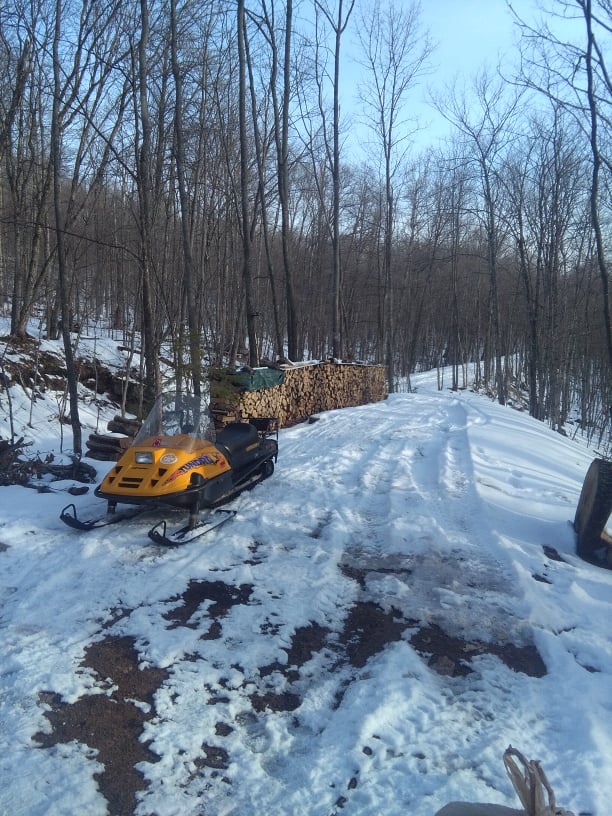
My snowmobile is a 2003 Ski Doo Tundra, an old school back country trapper machine, purchased at a forestry department surplus auction with a blown motor for the winning bid of slightly north of diddly squat. It did not take much more money or effort to get it back into good running order. Being the only link to the outside world for a winter, my life depended on that old Ski Doo. It has and continues to serve well and is not only a reliable tool, but also a fun toy for ice fishing visits and back country excursions. It just ain’t pretty.

The Tundranator, once the only link to the outside world

Legend has it that the engineers of that old Tundra designed it to be so brutally simple that a common outdoors person could disassemble it, then load the components onto the litter of a bush plane and be dropped off in a remote region, and then easily reassemble it in the wild. Ski Doo subsequently redesigned the Tundra, and the new larger shiny model is quite affordable and so much more capable but will no longer easily disassemble and fit on the litter of a bush plane. The need to disassemble that ratty old surplus auction Tundra and have it transported out into the wild on the litter of a bush plane will probably never arise. But if I want to, I could.

That same surplus auction coughed up an equally cast-off 1999 Suzuki King Quad ATV. Part mountain goat, part pack mule, part compact tractor; these old wheelers are a godsend to outdoors persons as they are the very definition of utility. While still in civil service, this one’s brakes had failed, and their function replaced by that of the front and rear bumpers. That poor old King Quad looked like it was pummeled to within an inch of death with an ugly stick, but it still ran like a Swiss watch. With the addition of new brakes that old beast has become a solid albeit ugly workhorse on the acreage. It was also a trusted link to the outside world during spring break-up, when the way in was still impassable and there was no longer any snow for the Tundra to traverse.

The Tinger Quad on grocery day

Cabin and road construction began during the dark days at the beginning of the pandemic and in a location far enough off the beaten path to be difficult to access. Folks were social distancing and being quarantined. In addition, the scope of work was quite small it was difficult to find an excavation contractor to take on such a job then make repeated return trips as the work slowly progressed. It was also not fair to ask a contractor to scrape and grind their way in through the low hanging branches and brush with a very expensive dump truck with equally expensive heavy equipment in tow, as the new road would be built later.

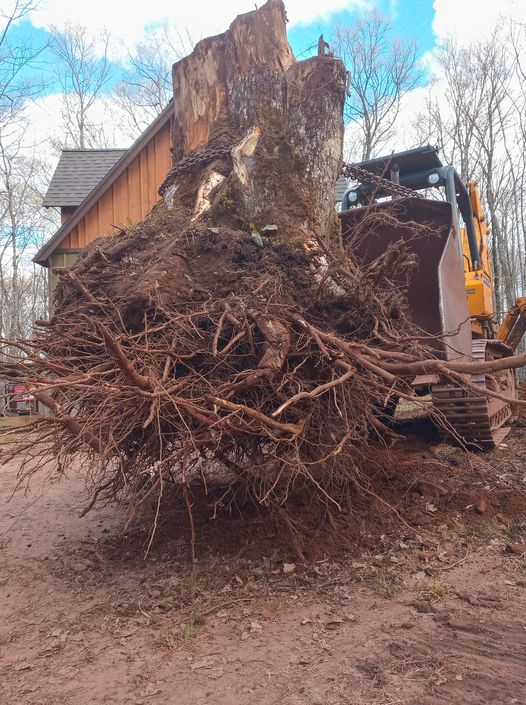
Big John at work removing big stumps

Solution came with the purchase of an old track loader bulldozer with a backhoe attachment, and then my nephew donated a destined for the scrap heap and butt ugly but stellar running 1957 Chevy dump truck named Mater. True to pattern, Mater’s brakes are of dubious operational status at any given moment. Having these two additional pieces of junk allowed me to proceed with construction and at my own pace.

Mater doing what Mater does

So, there are two schools of thought at play.

For the good stuff, the best stuff that could be afforded was purchased with the belief that the expenditure of resources and energy required for production and distribution of a long-lasting product would be less in the long run than that of buying short lived cheap junk. It also makes good economic sense to spend a little more upfront rather than bleed dollars later from a nickel and dime death of a thousand cuts.

For the junk, by carefully choosing cast-off but highly functional vintage items there comes great environmental responsibility by utilizing something that is already in existence, and therefore requires no further resources or energy to produce. No matter how deep the snow the old Tundra trudges on, when the throttle is thumbed the King Quad goes to work, and when the lever is pulled Mater spills dirt out of the back. Function never goes out of style. And cheap and free are very desirable price tags.

Both ways have value. Our society is geared towards convenience, and we are constantly bombarded with consumptive messaging. But convenience for the sake convenience really doesn’t improve one’s life and the quicky nirvana feel good high of purchasing an object quickly fades. There is great adventure in keeping an artifact useful, and thanks to a little thing called the Internet even those with MacGruber like skill sets can achieve MacGyver like results. There is no right way or wrong way with old junk, except that the only way to completely fail is to never try. Junk is a terrible thing to waste.

Pretty hard to improve upon that stuff.

Big John and Mater

Faeries, Nymphs, and Shooting Stars

Faeries were mythical apparitions from the days of yore. Sometimes a sprite, sometimes more human in appearance and proportion, faeries were believed to be the personification of the forces of nature. Faeries were believed to possess and dispense both magic and mischief.

In early legends nymphs were believed to be the very spirit of nature in the very human form of a beautiful maiden; and were the proprietary inhabitant of a particular patch of forest, field, and stream. Nymphs were believed to be alluring and magically inviting and were the imaginary seductresses of the lonely woodsmen of the Middle Ages.

Shooting stars are a much more tangible thing but their very unlikely existence and dramatic appearance before the human eye is even more improbable and miraculous than the sightings of the faeries and nymphs. Most shooting stars are meteoroids, formed by cosmic dust particles and rock debris being gravitationally drawn together from across the incredible vastness of space then aggregated into a more significant whole, only to be pulled into the earth’s oxygen rich atmosphere. With the cosmic energy of the universe focused and brought to bear, the fate of the meteorite is an inevitable white-hot blaze across the sky that lasts but a moment. As quickly as the shooting star ignites in the dark night sky it burns itself out and the resultant particles sift harmlessly down to earth.

Catch a shooting star. Wish upon a shooting star. For as long as humanity has been conscious of the heavens above, we have believed in the magic of the shooting star.

I have a friend; she is a beautiful being.

Our friendship and attraction across the vastness of humanity should have been unlikely. Despite these unlikely aspects and differences there was a gravitational tie that binds. The outdoors.

The beautiful being is at ease, at home, and finds comfort in the forest, field, and stream. She is in her element. Curious about all things great and small, she would use her learnedness of the natural world to enlighten and explain details and features that I previously deemed not worthy of curiosity or explanation. She identified and explained sounds that I accepted as mere background noise. She dispensed magic that made the sights and sound and scent of the forest feel more alive and vivid, a magic that made me feel like a long-lost part of the woods rather than an interloper.

There is a great aspen tree that has triumphantly created a grand crown above the canopy of the neighboring trees. I witnessed the beautiful being giggle as that flirting aspen had the audacity to flutter her leaves on a day nearly devoid of breeze while the underlying ash and basswood trees stood stoically still. I witnessed the beautiful being openly weep over the imminent demise of a small creature, a mortally wounded kingfisher she heroically tried to but could do nothing to save.

Despite the vastness of humanity, it became inevitable that we two would gravitationally attract and through some sort of magical somatic fusion, momentarily become one that plunged into a rich atmosphere in a meteoric blaze. And before I even realized what was happening, the white-hot light disappeared.

The warm glowing embers of friendship survived and gently sifted back down to earth.

I sometimes wonder if this adventure of the heart was real or just a figment of a woodsman’s imagination. Did this even really happen? But then I see the flight of a kingfisher, a flirting aspen tree, or a meteorite; and believe in the magic of faeries, nymphs, and shooting stars.

Saturday Night Fever

Grandma T lighting the sauna on a bitter cold Saturday ca.1974

Imagine that big pharma devised a pill with health benefits that included improved heart health, reduced dyslipidemia and hypertension, and improved vascular health. Imagine if modern orthopedics devised simple and pleasant protocols to ease pain and stiffness. Imagine if dermatologists created a magical pathway to more healthy skin. Imagine if mental health care devised a simple process that improved cognitive health, focus, and attention span, helped alleviate stress, depression, and anxiety. Imagine a simple and natural way to detoxify the body. Sound too good to be true?

We need not look to modern medicine or big pharma for such fantastic remedies. These wonderful benefits already exist and are no further away than the good old fashioned Northern Wisconsin back yard, back woods, or lake side sauna! While the sauna and its magical side effects were imported into the Northwoods by homesick Finnish immigrants within the relatively recent last 140 years, it has been an integral component of good health and happiness and identity for Finns for thousands. And Finland is a very healthy and happy place.

The Sauna on the Rock

“Rakentaa sauna ensiksi” was a proverb amongst the Finnish pioneers entering the Northwoods and that roughly translates to “build the sauna first”. And build the sauna first is exactly what they did. The sauna provided those pioneers with temporary shelter, personal hygiene, and a sterile environment for medical emergencies and childbirth.

Stone from the land and cedar coughed up during a violent storm on Lake Superior

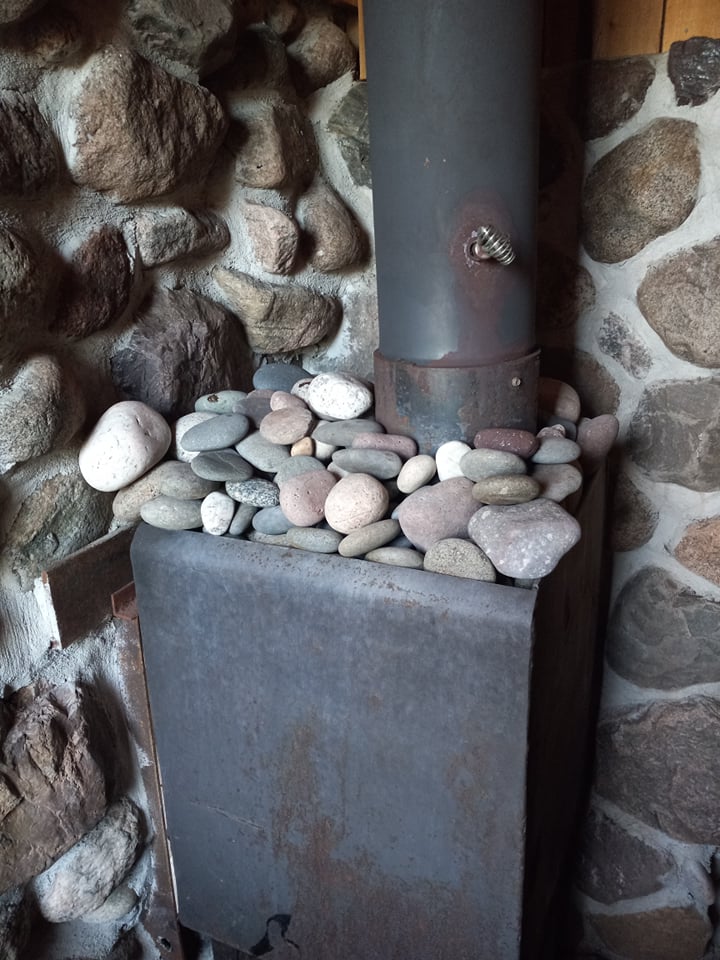
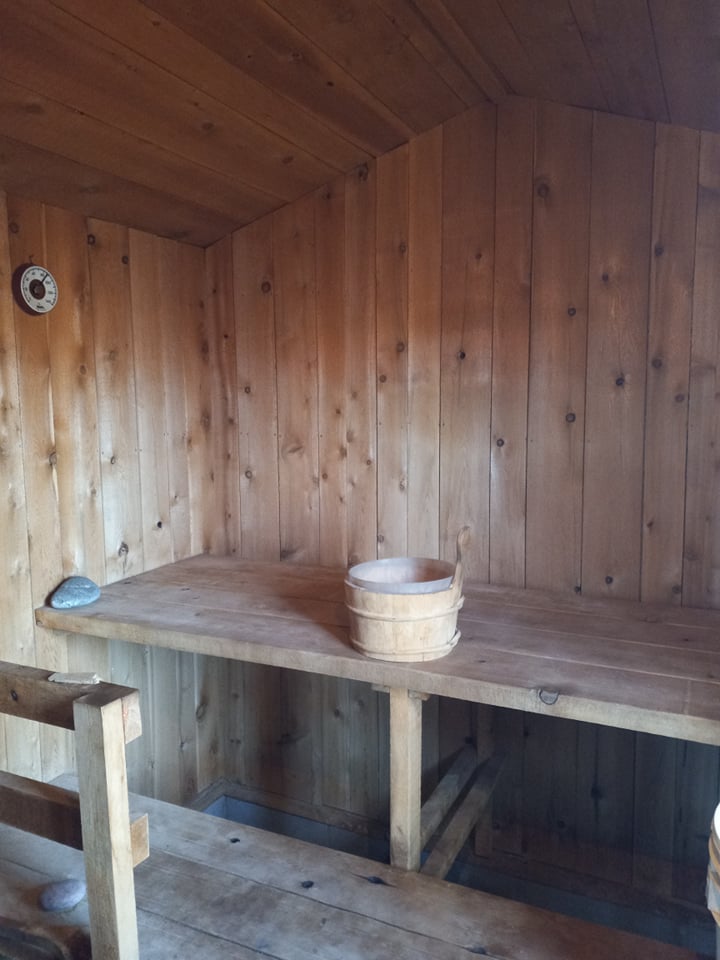
When I cleared the little campground that eventually has become my homestead, the sauna was built first. The framing lumber and siding were produced upon my brother’s portable bandsaw mill from trees doomed by insect infestation. Later a violent storm raged across Lake Superior and tore old growth cedar trees from faraway shores, then coughed them up upon the shores of Saxon Harbor. My dad helped in the harvesting of the washed up logs, and with help again from my brother and his sawmill, those ancients yielded beautiful interior paneling. Plate steel for the wood burning sauna stove was bent up by my son based upon a design found online, then was welded together by my dad, and then the door from Grandma T’s old sauna stove was located and installed upon this new stove. Four generations integrated into the making of a sauna stove is a pretty good start.

I had grown up in the sauna culture. And just as Saturday night is sauna night for Finns across the globe, as a child, it was at Grandpa and Grandma T’s farm as well. Grandma Juurakko’s sauna fell into disrepair, so her Saturday night sauna was at a neighbor’s. Afterwards, she would come strolling back to her home, red faced and bundled up and jacketed and scarfed, even on the hottest Saturday evening in August.

A typical Saturday sauna usually includes two 15-minute sessions in the hot room with a cool down in between and then after. Cool down is outside, if appropriate, regardless of the time of year. In the summer that usually means sitting out to break the sweat. In the winter that entails crappie flopping into the snow. If the sauna is close to the lake, there is nothing more refreshing than a post sauna dip. Back in the day when Northwoods lakes commonly iced over in November, sauna on the first Saturday night of deer season at Uncle Ero’s cottage entailed chopping a hole in the ice and then taking the plunge.   

There are countless stories, perhaps some apocryphal, about Americans conducting business in Finland. These stories culminate with the Finnish businesspeople, the prudish American client, secretaries and staff, and perhaps even a random janitor, all nude and of both genders congregating in the corporate sauna in celebration of a day’s work well done. The sauna culture of the Northwoods has been somewhat anglicized and toned down from that of the Finnish purists. Growing up, if we were in the sauna with folks of the same gender, it was not a big deal to wear nothing. If folks in the sauna were of the opposite gender, bathing suits or towels were worn.

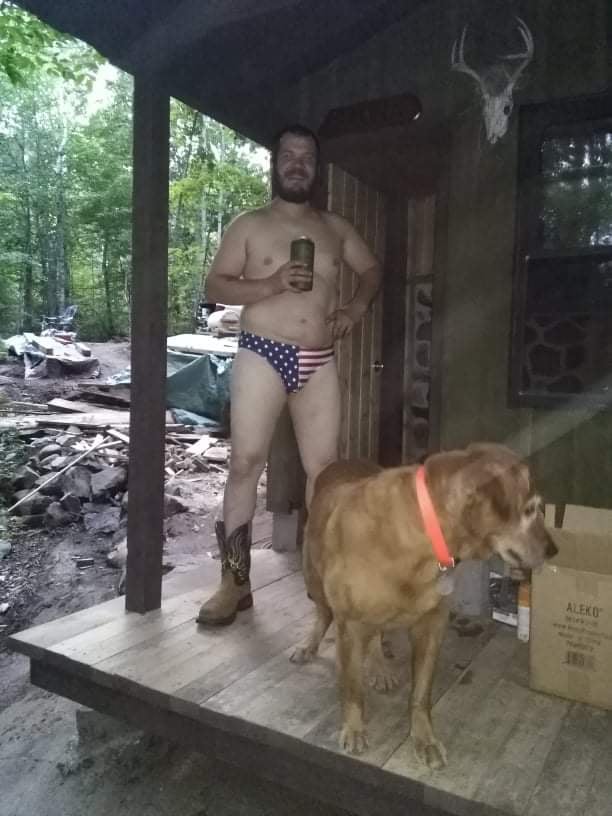
The Maple Creek Rambler and Toivo the Logger Dog cool down at the Sauna on the Rock

The following is strictly for United States readers, those of you from the rest of the world can skip the next paragraphs.

There is a dramatic difference between naked and nude, and that difference is elemental to sauna culture. Naked is being devoid of cover and exposed. Naked is the bare ass opening in the back of a medical gown accompanied by the clanking of stainless steel and the snap of a rubber glove. Naked is the commercialization or trivialization of sex. Naked is cold and distant. Naked has no place in the sauna.

Nude is also the absence of being clothed but is the polar opposite of naked. Nude is egalitarian and honest and wholesome and embracing. In the sauna culture mindset, one can allow themselves to be nude in the sauna but should never feel naked. Once outside of the sauna, nude is an integral element in the communion of flesh and soul amongst a loving couple, but that is another topic. It is time to grow up and see this difference between naked and nude, United States, the rest of the world has already figured this one out a long time ago.

It may weird out most Americans out to be outside and be nude. But depending on the season and time of day, it is good for the soul to step out of the sauna and feel the warmth of sunlight or a cool breeze upon skin that is not normally exposed to such. Far too many Americans muddle through a long life without ever experiencing the lively sensation of stepping out of a hot sauna and feeling the invigorating embrace of a brisk winter breeze upon heated skin and damp pubic hair.

The sauna culture is a wonderful gift passed down from generation to generation. It is the gift of good physical, medical, and mental health and of a wholesome sense of wellbeing. It is the gift of pleasurable personal hygiene. It is the gift of being comfortable within and unashamed of one’s own skin. It is a gift that has been perfected over thousands of years in a faraway land and is hopefully a gift that can be paid forward for another thousand years across the globe.    


The Cousin Eddy Camper

Courtesy of Cedar Firefly

Long before there was a cabin on my acreage there was a campground. The campground consisted of the sauna, a privy, and a small clearing for parking a camper. However, the concept of dragging our plush and shiny camper through the forest was a point of contention. It goes without saying that I repeatedly lost that argument and the campground remained camper-less.

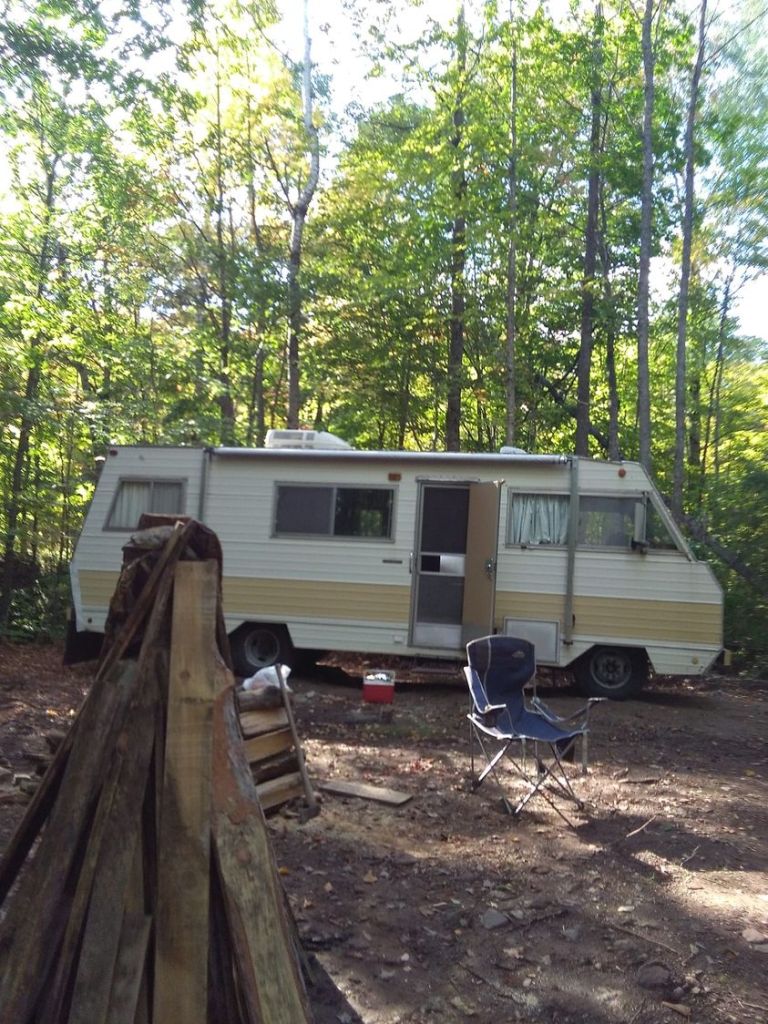
Then one fine day while trolling Craigslist a veteran RV materialized upon the screen. A product of the glorious harvest gold 1970’s, that Craigslist camper was old and crusty and woefully outdated but still ran and could be driven and boasted a meager $900.00 price tag. A few days later, keys and title hot in my hand, that camper christened “Bertha” by the previous owners was rechristened “The Cousin Eddy Camper” and scraped its way through the brush and low hanging branches to my previously camper-less campground.

With a shape that can only be described as the futuristic styling of a stylist trapped in the groovy 1970’s, The Cousin Eddy Camper quickly became the butt of many a joke. But despite the quirky appearance there were redeeming qualities. The interior, although never upgraded and still bathed in the glow of harvest gold and with plush carpet, was mostly clean and mostly devoid of camper funk. It ran and drove, and while the brakes sort of occasionally worked the front bumper always worked. It was dry and had no leaks. The interior lights and fridge mostly worked. It was as comfortable as the groovy 1970’s. Far from being butt-hurt by the barrage of ratty camper jokes, a photo of a certain fictional character emptying an RV shitter into a storm drain was proudly hung.

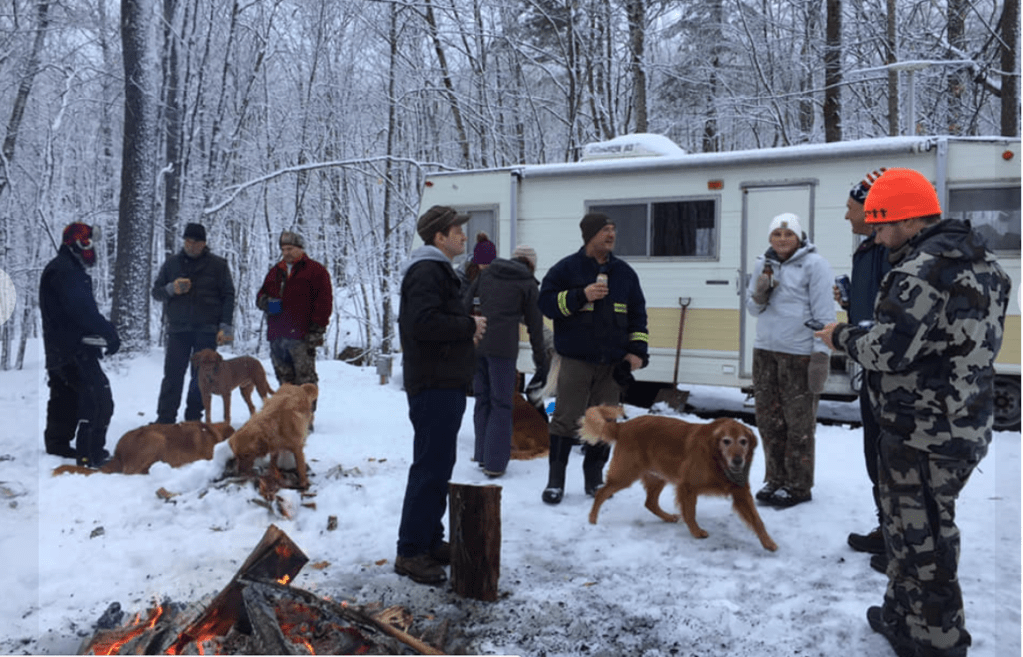
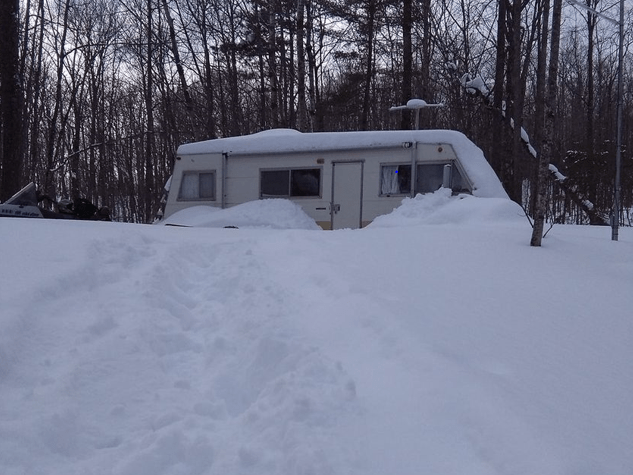
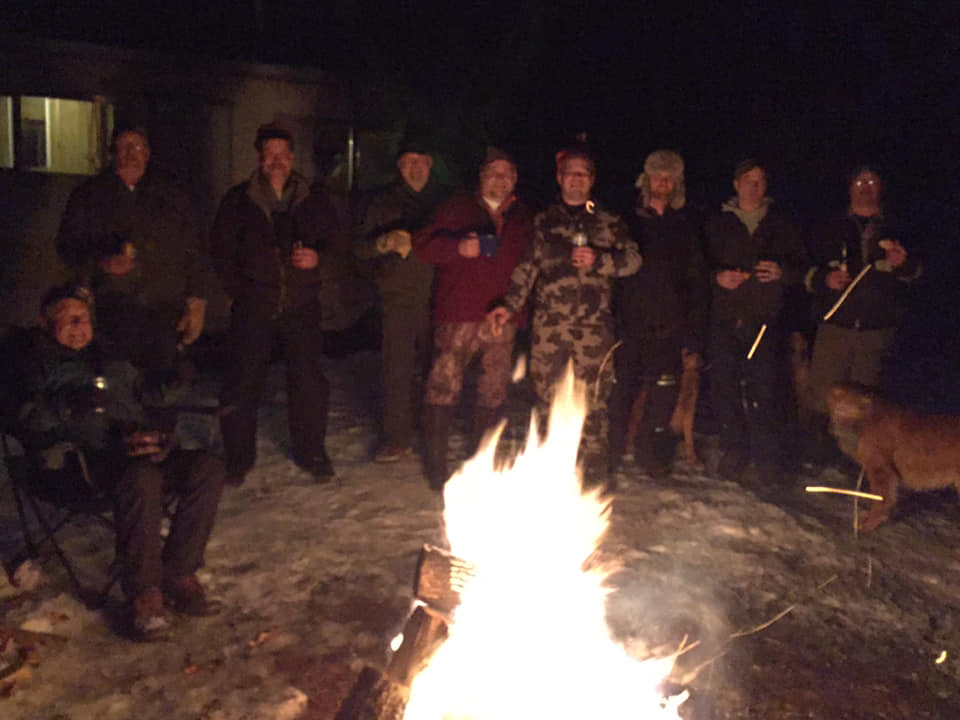
That old camper contained the beer fridge for many a summer get-together and became the warmup shack for winter bonfires. Post sauna Saturday nights were spent crashing in The Cousin Eddy Camper. Despite being overall quite clean, there were some curious stains on the mattress that weirded me out just a bit, as one can never be quite certain what sort of groovy stain producing activities may have been going on upon that mattress back in the 1970’s. I always slept in a sleeping bag upon the banco rather than in the bedroom upon that stained mattress.

There came a night when marital bliss imploded, and I escaped from the household with the shiny camper in tow. The Cousin Eddy Camper was moved aside, and the shiny camper complete with a stain free mattress took its place. Time marched on, the lawyers argued, the Judge listened intently then judged, and then one day the ink was dry on the divorce decree. On my side of the marital property settlement ledger was The Cousin Eddy Camper, stained mattress and all.

It was during the depths of the pandemic that I offered for sale the camper formerly known as Bertha, now known as The Cousin Eddy Camper. A young woman responded to my ad. She explained matter of fact that this marvel of 1970’s held great appeal, particularly at the asking price point. We negotiated a very soft price then arranged a viewing.  A little voice inside told me to remove the photo of a certain fictional character emptying an RV shitter into a storm drain and I did.

On viewing day, she stepped into the camper and looked about and ran her hands across the antiquated harvest gold surfaces then welled up with tears. “Less than you expected?”, I asked apologetically. She had driven a long way to view the camper. “No, I have not had a place to call my own for over a year”, she sobbed. A lump formed in my throat.

To me, my friends, and family that old camper was a quaint joke, a funny reference to a fictional character emptying an RV shitter into a storm drain. But to this young woman that old camper might soon represent home and hearth, perhaps even hope.

I wanted to reach out and hug this human being and tell her everything would be alright, but it was the midst of a pandemic. We feigned a hug separated by an invisible prophylactic barrier and with masked faces turned away from each other. I fought back tears.

We tend to prop ourselves up by exhibiting empathy towards those we perceive as less fortunate. Our churches tell us to help those less fortunate. Certain news media counter that it is those same less fortunate people that are the cause of all the problems. But it is humbling to look a person in the eye that you perceive as less fortunate and then suddenly realize you are both in the same boat, or both in the same ancient harvest gold RV, in this case. Neither of us had a solid foundation beneath us, nor did either of us have four permanent walls or a solid roof above to call our own.

I had the good fortune of having a job with benefits and a regular paycheck, had no idea what her financial status was, yet we were equals. I was staying in a camper to initially escape a failed relationship and ultimately spent 17 months there while the pendulum of fate swung back and forth. The buyer of The Cousin Eddy RV spent the previous year living in her car for reasons of her own.

While living in an RV out in the woods without year-round access, without modern creature comforts; all while being gainfully employed may not be homeless in spirit or definition, it is none-the-less outside of the American norm. It can be argued that such a lifestyle choice, if indeed it really was a conscious choice, might be indicative of less than stellar mental health, much as that same judgement is often heaped upon those experiencing honest-to-gosh real homelessness. Probably true.

But in those 17 months there were no distractions of the modern world. There was the great simplicity in having limited space and responsibilities. There was the saturating tranquility of the forest and the rhythmic patterns of nature that constantly reassure that seasonal change is on the horizon. Having made it through, it now does not matter whether that was 17 months spent in a camper with less than robust mental health or 17 months spent in a private think tank.

The path forward now is one of personal enrichment rather than accumulation. It may be easier to espouse the parable about the man so poor that all he had was his money when you really don’t have a lot of money, as a divorce can be quite hard on the pocketbook, but I do now understand. The sale of the Cousin Eddy Camper helped me understand. I will not be envious nor stand in awe of those who have more and will not think of those having less as being less than.

I have now created a solid foundation beneath me, have four permanent walls and a solid roof over head. I hope the young woman that purchased The Cousin Eddy Camper has the same.   

Courtesy of Cedar Firefly

Burning Squatch

Every small-town newspaper has a community calendar. Be it art, music, activity, or some weird local specialty, the community calendar promotes the goings on that the community has to offer. These events are usually free or accept donations and are often put forth by volunteers.

Many a day has been salvaged by the bored newspaper reader scouring the community calendar then stumbling across a gem of an event, or maybe even just a filler for a hapless afternoon. The reader goes, has a good time, and may even reflect for just a moment on what a nice job the volunteers have done. But have you ever really taken the time to deep dive and truly appreciate just how much time and effort goes into these local passion projects? Have you ever volunteered for these activities? Me neither.

This pandemic is more than a medical crisis, it is also an emotional and mental health crisis and 2020 was a bleak year because of it. There was social distancing. Masks and the battles over masks. More social distancing. Quarantines and the battles over quarantines. Social distancing and the battles over social distancing. Healthy and not so healthy people falling mortally ill. Information and misinformation battles. Life disrupted. Humans are social animals. Sick people were and are dying and healthy people are lonely and adrift and slowly dying inside.

Courtesy of Mama Bear

A group of nice people had had enough. But what could be done in the middle of a pandemic? A community event would have to be outside, but this was the dead of a Northern Wisconsin winter. A community event had to exercise safe practices. Could an event with safe practices still be a social event? A fun event? Would anyone even show up during a pandemic?

Instead of cancelling their upcoming 2021 Hygge Hike snowshoe trail event, the nice people had the audacity to not only press on but to go all in and in a very grandiose way. Instead of being held in the afternoon as in years before, the full moon just begged that it should be held at night. Instead of the participants relying on the traditional flashlights and headlamps to navigate through the dark of night, the nice people had the audacity to envision lighting the trail for the hikers. But would anyone even show up during a pandemic?

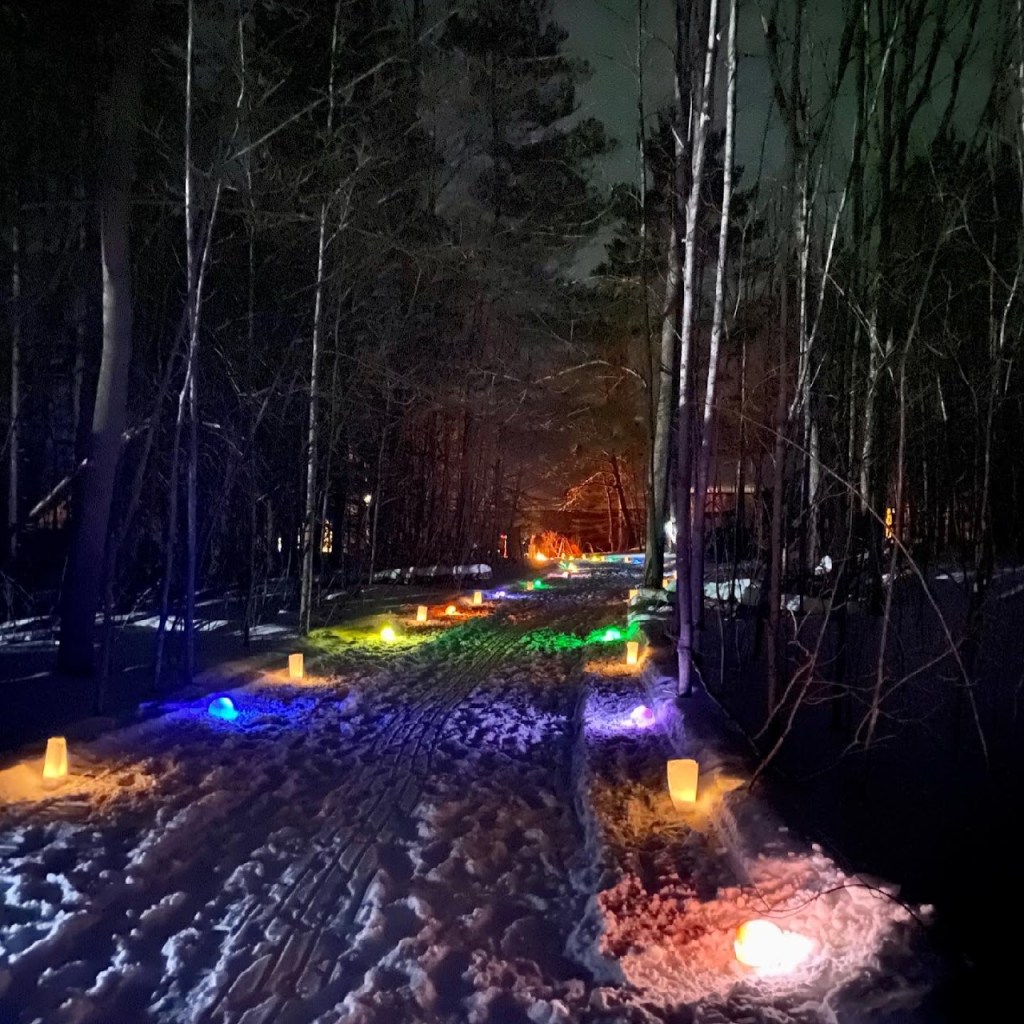
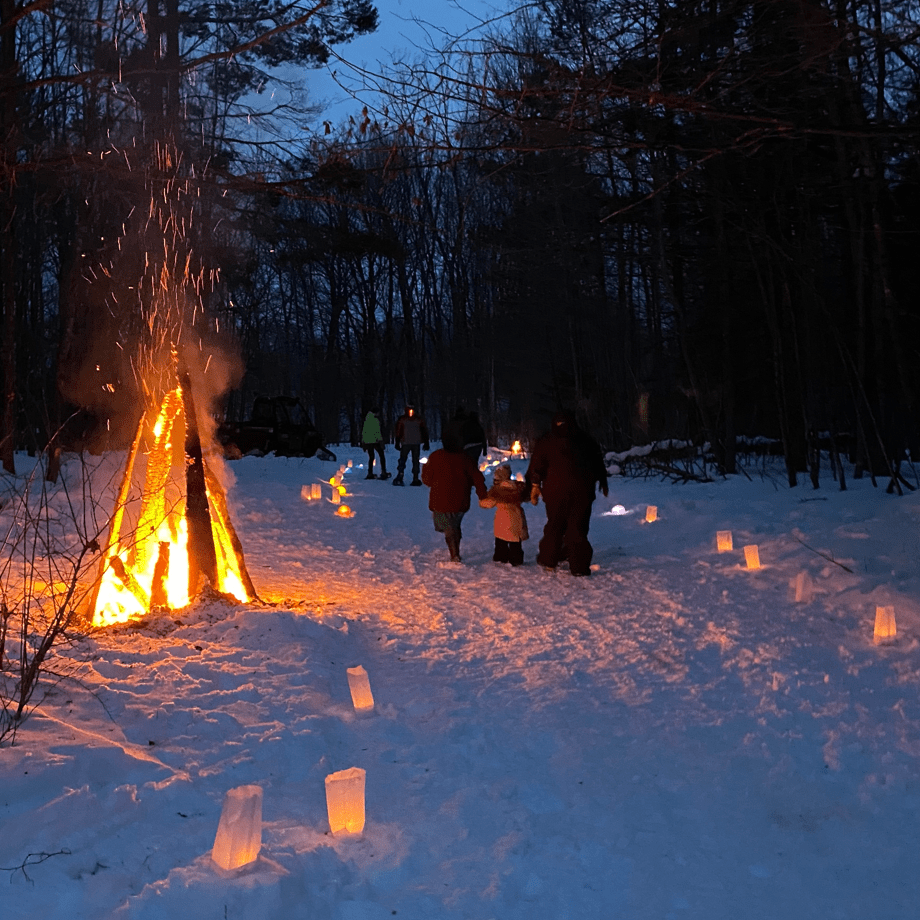
Plans were laid. The start and finish would be illuminated by colorful ice candles. The 1.5 mile hiking route would be lit with over 600 candle and ice luminaries, twelve Swedish torches, and three bonfires, one of which would be tended by a fire dancer, just for good measure. Of course, there would be hot cocoa at the finish. Supplies were purchased and tasks assigned. Eager volunteers toiled to perfect each detail. But would anyone show up during a pandemic?

Courtesy of nicer715.com

The hike would follow a recreational trail less than a snowball throw from the back door of my cabin, so on the big day I was able to witness the nice people in action. The weather was perfect, the plans were perfectly executed, and when night fell folks not only showed up but showed up by the hundreds. And as if on cue, the full moon proudly appeared.

Courtesy of nicer715.com

Folks from all walks of life were out in the crisp night air as the luminaries and fires cast flickering and dancing shadows of trees and hikers about the snow and the full moon above cast a friendly glow about the night sky. The aromatic scent of pine and cedar smoke gently wafted about. This audacious plan spawned pure joy and the belief that today was going to be okay, and better days lie beyond the depths of this dreaded pandemic. It created a sense of community in a time of distancing. It created normalcy.

That night like so many before and after, the world was grappling with the cold and wretched grips of a pandemic. But the nice people offered a magical and inviting refuge and warmly welcomed all who ventured forth.

Legend has it that there was an after party for the nice people out in the forest, a party to acknowledge and commemorate their hard work and audacious vision. Glasses were raised and toasts were offered. An effigy of a yeti was set ablaze in a grand bonfire, and burgers and brats were burnt on the grill. It was no Woodstock and was not meant to be, the First Annual Burning Squatch was a celebration of and for the nice people.

Courtesy of Entwife

The original Woodstock had 600,000 attendees but there are now about a million and a half septuagenarians and octogenarians that claim to have been there. 100,000 bald headed grandpas claim to be the dude perched on the speakers when Hendricks played, and 200,000 blue haired grandmas claim to be the hippy chick that flashed her breasts at Sha-Na-Na. Burning Squatch was much more exclusive. Fourteen nice people were there, all legends. And nobody, men and women included, flashed their breasts at Sha-Na-Na during Burning Squatch.

Please support N.I.C.E.R. (Northern Iron County Engaged Residents), the Penokee Rangers, and follow FeLiveLife.org. Or better yet, volunteer. It is an easy way to become a legend.

Courtesy of High Plains Spirit

Rocks and Trees

It can be a stark contrast, moving from the modern world back into a natural world that still exists in the forest.

Meal preparation in civilization used to entail staring at a microwave oven while fidgeting impatiently as the seconds tick away and the packaged food within was harshly nuked. The lack of a microwave, indeed the very lack of electricity, now mandates thoughtful cooking over the stove. Staples and ingredients replace packaged or pre-processed convenience food due to the lack of expansive refrigerator space that the plugged-in world doesn’t think twice about. And mealtime in the woods is a time for conversation and visit. Human companionship is not a constant out in the forest, but even when there is no other person about, the birds and squirrels and bears and coyotes will always hear what you have to say. A television will never hear what you have to say and could care less about what you think.

Post meal in civilization used to be spent relaxing and being fed thought by the television. When alone in the forest and without man-made distraction, time is readily available, and the peace and tranquility of the environment allows for just plain old thought. Time for certain observations of the natural world to take on very human elements. Or perhaps time to observe certain human elements mimic inherent traits of the natural world.

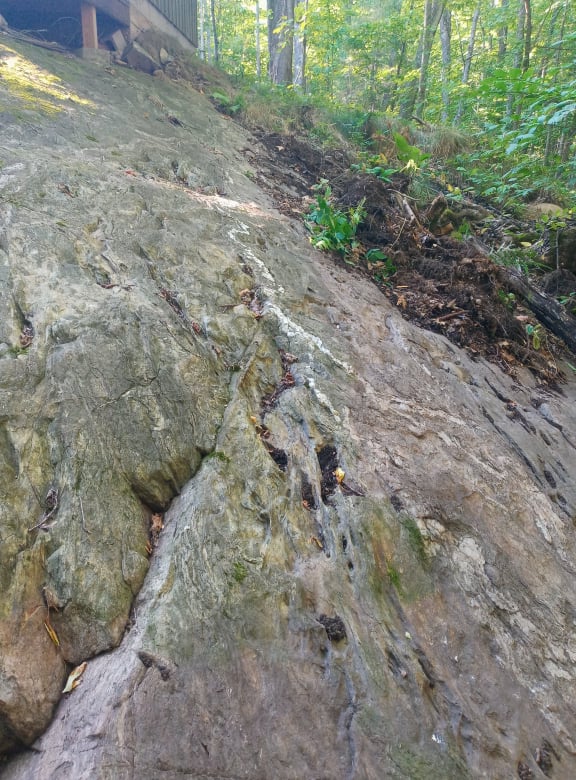
My sauna is perched upon a grand protrusion of monolithic rock. Basement rock, I have been told. Sedimentary rock so old it was formed from primordial ooze not long in geological time after a certain conglomerate ball cooled and crusted enough to become planet earth, a time when sulfur was a more common element than oxygen in her gasses and liquids.

Rocks cannot procreate, they are the byproduct of something else. They are formed as the earth spasms and heaves her massive molten bowels to the surface, creating igneous bedrock mountains in an orgy of fire and sulfur and brimstone. They are created as those mountains are weathered down and the detritus is laid down in even stratus then compressed back into sedimentary bedrock. They are formed when mighty glaciers scrape and tear across the bedrock creating boulder and cobble and gravel and sand and laying those down as till.

But it is the mighty bedrock that captures the imagination, as solid and reliable as the name implies and the foundation upon which all else is based.

A closer look at those ancient rocks that my sauna is perched upon reveals a deeper tale. How those basement rocks became exposed at the surface is itself a violent tale of a continent being tore apart by an event so cataclysmic that it resulted in the creation of the greatest of the Great Lakes as well as the fractured edge of the crust of a planet being turned skyward and thrust forth.

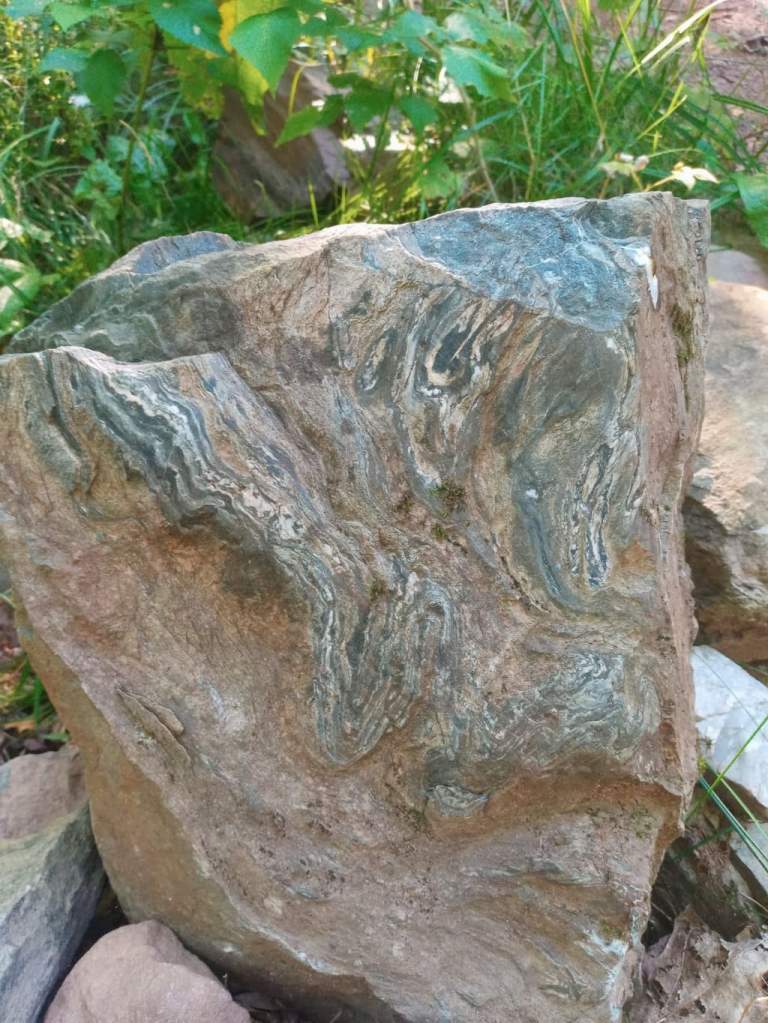
Over the eons those basement rocks have been heated and compressed and stressed and thrust upwards into convex synclines as well as downwards into concave anticlines, sometimes resulting in a bizarre wavey appearance. That rock that the sauna is perched upon is chemically and elementally the same rock formed eons ago. But each time a force was placed upon it, it changed. All the original elements may remain, but each application of force left the monolith warped or fractured or crumbled and it was never the same rock ever again.

10,000 years ago, as the last of the mighty glaciers of Northern Wisconsin were begrudgingly retreating, the seed of an eastern hemlock had the audacity to germinate and take root in the very shadow of that doomed ice sheet. Those roots spread and wove and laid mat into the deposited glacial till and the milky meltwater provided moisture and nourishment.

Once established and dominant, the mighty hemlock created the perfect environment below for her offspring. The lack of sunlight below starves off the lesser species and the debris that falls to the forest floor slowly decays into damp humus, creating the perfect external womb for her seeds to take root and thrive without competition. Her massive crown above creates a microclimate below that coddles and protects the young progeny from the ravages of storms and affords them the opportunity to reach for the sun at their leisure.

With a lifespan measured in centuries rather than decades, the towering hemlock endures countless limb snapping snow falls and staggering ice storms. She braces herself for a thousand violent storms, and despite being twisted and tortured by the winds, each time returns to her previous elegant form once the storm subsides, minus some needles and dead wood.

Day after day, year after year, she consumes carbon dioxide, building her mass one carbon atom at a time and blessedly releases back into the atmosphere two life giving oxygen atoms for each CO2 molecule consumed. Her natural purpose in the grand scheme of things is to reproduce and protect her progeny but each moment she lives she creates life for every breathing being on the planet.

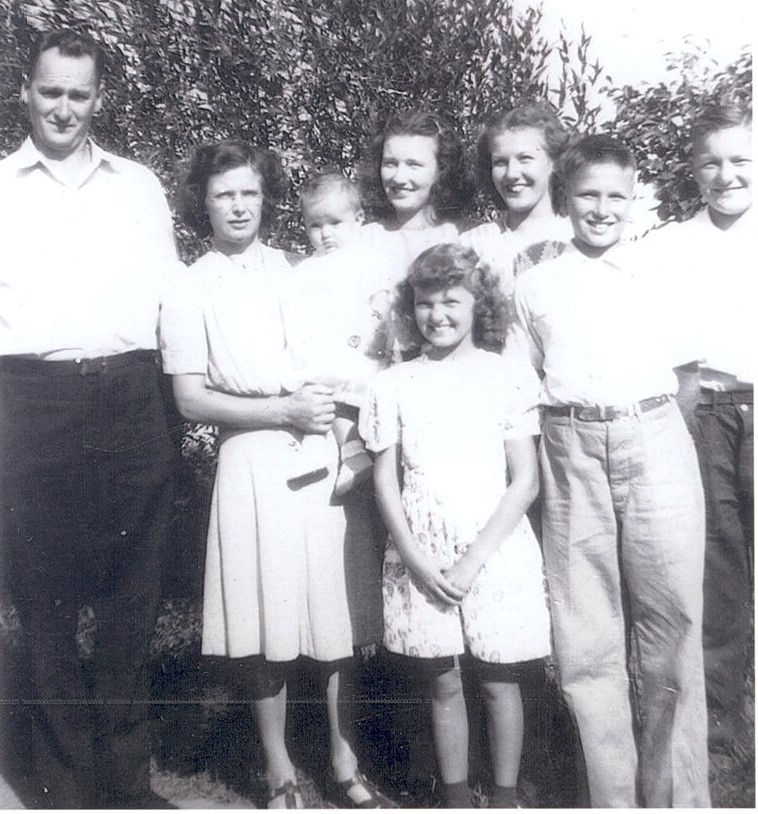
A horrible part of life is that there are moments of tragedy that change things forever. Long before they were Grandpa and Grandma Thompson, they were simply Pa and Ma Thompson, and they had the misfortune of experiencing such a moment.

Their phone rang and a young girl answered. A rather stern and official sounding man asked the young girl all sorts of questions about her brother Charles. Where did he work? Who were his friends? Then the official sounding man asked to speak to Mr. Thompson.

In that day and age, there was no question that the man of the house was the bedrock of the family, that was the accepted norm in society and indeed Pa Thompson was. A towering giant of man, his imposing presence and larger than life personality left no other deduction but that.

“Yes?”, Pa Thompson answered, and a hairline crack began to form in the bedrock.

“There has been an accident”, the official sounding man continued, and that crack broke into a chasm in the bedrock.

“Your son Charles…” the official sounding man continued, and at that moment a portion of the bedrock was pummeled to sand, and the bedrock man set the phone down and wept.

Ma Thompson, barely five foot two on a tall day but casting a shadow longer than that of the tallest hemlock, picked up the phone and faced into the impending storm, a storm unlike any her or her family had ever experienced and one that no family should ever have to weather.

Some storms come and leave a forever changed the world in their wake. Pa Thompson slowly returned to his role as the bedrock of the family, but he was never the same bedrock. And some storms might twist and torture and induce ring shake or other damage that goes undetected until the lofty hemlock eventually meets its end then falls to the ground. If that was the case with Ma Thompson, she gave no clue. When the storm seemingly passed, she returned to her previous elegant form.

Bedrock and Hemlock, left. Charley, second from right. The young girl, front center.

Motorcycles and the Minimalist

“Get your motor running, head out on that highway!” exclaimed the band Steppenwolf in the 1968 anthem penned by Mars Bonfire. In post-World War II pop culture, the motorcycle is the symbol of freedom, the mythical horse of the self-described modern-day cowgirl and cowboy.

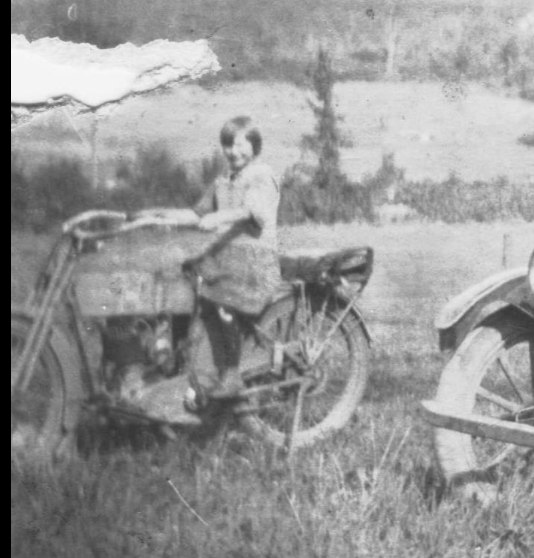
Grandma ca. 1918

My Great grandpa Silvola was a motorcyclist. Many an over one-hundred-year-old grainy black and white photos exist of that motorcycle purchased back when motorcycles were young. Part of family legend and lore was that he removed the headlight so that his daughter, my grandma, could ride upon the handlebars while my Great grandma straddled the rear fender. As a family they traversed the rutted and rough and tumble pioneer byways of the early Iron Range on that old motorcycle, often doubling back upon discovering that Great grandma fell off the back of the spindly contraption somewhere along the way.

Back in the day, most motorcycles were purchased by folks too poor to afford a car rather than as the vehicle of an adventurist. I was but a young boy when Great grandpa passed so I did not have the understanding to ask which scenario might be the case. I suspect it was adventurism.

A couple of generations later, an older cousin, who was no doubt inspired by the movie “Easy Rider” stopped by the village we lived in for a visit. His ride was a WWII surplus Harley flathead with radically long forks, a king and queen seat with a smoke show lady in the queen seat, psychedelic yellow and lime green paint scheme, and a shrunken skull suicide shifter knob. His bike was the most bitchin’ chopper ever. He offered each of us much younger cousins a ride. “Where do you want to go?”, he asked me.

I gave him directions to my friend’s house.

“No, let’s ride past the house of the kid who doesn’t like you”, he replied. My cousin Daryl is the coolest guy ever.

And so began a lifelong affair with motorcycles for a certain impressionable young boy from the village.

I was barely a teen when the last draft of the Vietnam War occurred. A neighbor in the village had received a motorcycle as a graduation present, a beautiful Ruby Red with gold pinstripe Honda scrambler. Paranoid about being drafted to go to ‘Nam, my neighbor put 100 alcohol-soaked miles on the brand-new cycle then sold it to young punk me for ten cents on the dollar before enlisting and shipping off to Germany. It even came with a lucky rabbit foot key chain. At the age of thirteen and being the kid who checked the family mailbox every day after school, I was able to register that bike with the State of Wisconsin and in turn received a shiny new license plate in the mail.

That legit Honda scrambler coupled with that credible Wisconsin license plate “legitimized” 13-year-old me being able to take an occasional day cruise up to Duluth/Superior 110 miles distant or to Minocqua/Woodruff 60 miles distant. Undetected, under the radar, and under the cover of completely bogus stories. In the context of those times and being of that age, that was true freedom. Sorry mom, I’ll go to my room now.

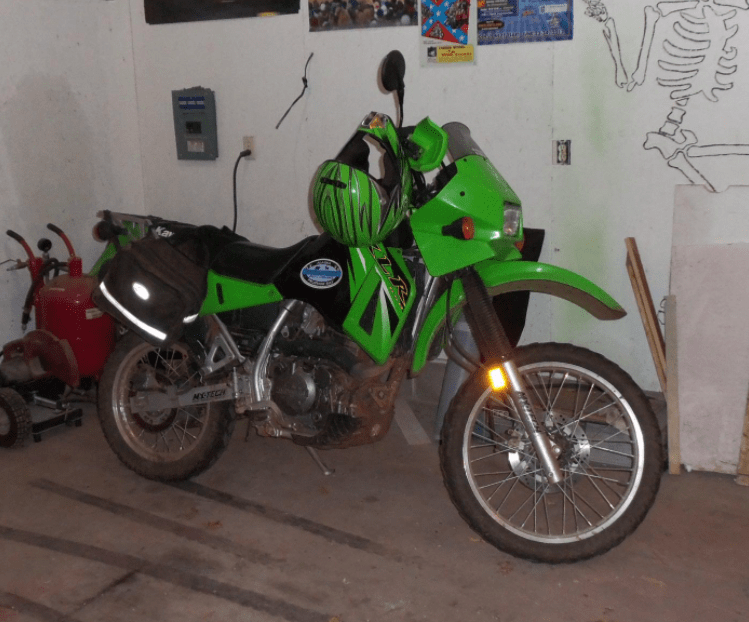
As time wore on the natural gravitation was away from the asphalt-based cruisers and towards dual sport motorcycles that were equally capable on or off road. This was very contrary to the Harley biased crowd that dominates motorcycling. “When are you going to get a real bike?”, or “Why do you ride a kid’s bike?”, they chided.

A moment of redemption came at the expansive Fall Ride in Tomahawk, WI. Harley Davidson has a satellite production plant there and that event is dominated by their loyalists. As a dual sport rider, I endured the good-natured ribbing of my Harley riding compadres all weekend. Until we exited to an event with a parking lot that contained 5000 black and chrome clones, all lined up in neat and pretty rows. “Where did we park?”, my Hog riding friends asked. Suddenly the appearance of my tall and spindly lime green cycle in the far corner of the lot, towering over the sea of black and chrome look-alikes wasn’t such a bad thing.

But “looking for adventure” for me starts where the blacktop ends. And a Harley is at a severe disadvantage where the blacktop ends. That is why that unappreciated by the masses dual sport motorcycle means so much to me. Black top leads to two tracks which leads to single tracks which leads to hikes which leads to the places I want to be. True adventure begins where the blacktop ends.

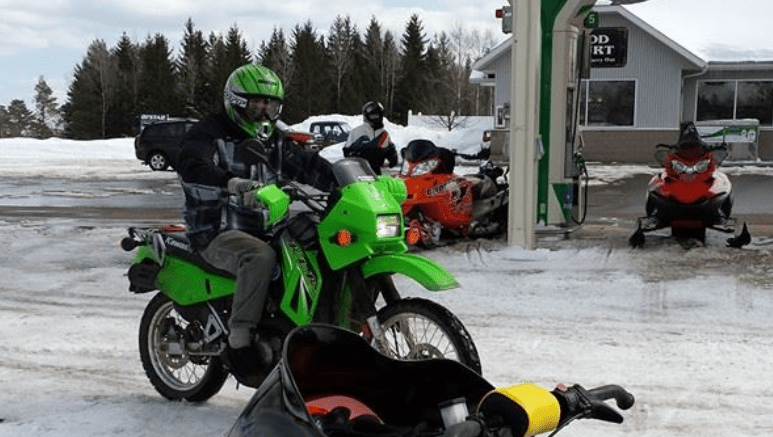
One of the most exquisite experiences in the conflation of the natural and man-made world happened to me while riding a ratty dual sport. During a brisk cruise down a remote woodland fire lane that consisted of a series of roller coaster “whoopsie daisy” hills a covey of ruffed grouse flushed up. I braced myself to take a partridge hit or two in the head and chest then experience the inevitable motorcycle crash. Much to my surprise, the birds were almost immediately in synch with my speed. Great serenity instantly flooded me. Upon experiencing zero g’s at the apex of the next crest barely a moment later and with a covey of ruffed grouse in flight and in synch and about my head, it was as if I had joined them in flight.

Courtesy White Thunder Riders Snowmobile Club

There were countless other adventures on that old bike. Fall color tours, searching out elk, scouting out potential camping spots, flat tracking on snowmobile trails in the dead of winter, and covering great distances that may have taken days on foot instead of mere hours; all were made easier or more fun with a motorcycle.

Does a person truly need a dual sport motorcycle? No. Could a dual sport be a more fuel efficient, reliable, expedient way to expand your experience further into the vast green and white world and possibly even minimize your adventure-based carbon footprint? Yes. After all, that same gallon of gasoline burned in an SUV may well get you four times further up the trail if poured into the tank of a dual sport motorcycle instead. But…..

A big component in this newly adopted lifestyle of mine is minimalism. Simplifying and owning and using only what one truly needs creates great inner peace and melts away much of the self-imposed pressures wrought by rampant consumerism. There is empowerment in solving a day-to-day problem or performing a mundane task without relying on the latest expensive time saving farkle or gizmo. Easy. Simple. Minimal. It adds a certain purity to daily life.

And one less new motorcycle or doo-dad being built and shipped and consumed results in a slightly smaller hole in the ground for the extraction of raw materials, a lot less carbon being utilized for production and distribution, and ultimately a lot of carbon that will never be consumed and emissions that will never be emitted in daily use due to its nonexistence. There would also be less stress on me and you, the would-be consumers, over buying and paying for a widget that really may not be needed, and statistically will probably end up in a dumpster or forgotten on a shelf within three months’ time. Easy. Simple, Minimal. It adds a certain purity to the span of a life.

A new dual sport motorcycle would certainly be nice. But a new pair of quality Carolina boots when the current pair finally wears out will be much nicer, much more responsible, much more useful, and will get me just as far up the trail.

Big Oil and an Old Lumberjack

Grandpa T was a giant of a man. Born in the first decade of the last century to pioneers of the Iron Range, it was inevitable that his life’s work would be based in the harvest and extraction of resources.

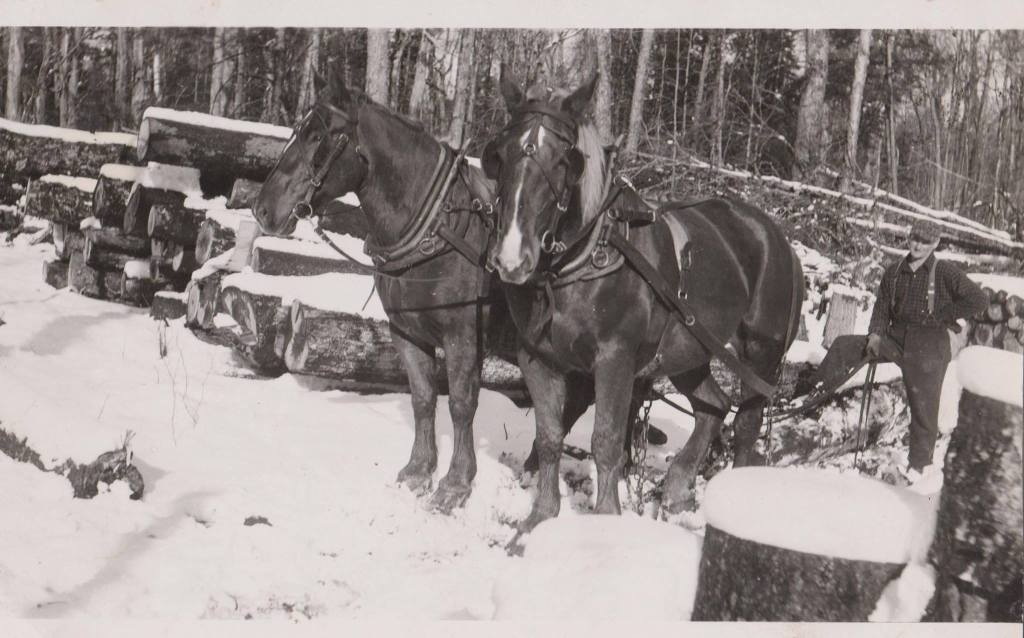
As a younger man he worked in various sawmills then found his way into the lumber camps. Hastily constructed, these camps were rough-hewn with roofs barely protected by flimsy tarpaper. Food stuff was nestled into root cellars with robust meals being prepared in a central cook shanty. Sleeping was dormitory style in crude log wall bunkhouses scattered about. Some of these short lived hell-on-wheels like enterprises were so hastily built and with such large gaps between the logs that when the cold winds blew in from the north, the centrally located wood stove could barely keep itself warm. It was common knowledge amongst the lumberjacks that the barns were the best built structures in camp, such was the value of the horses.

As the pristine stands of virgin timber were methodically harvested, the camps were hastily abandoned and the crews leap frogged forward to hew out a new camp, deeper into the new forest that was soon to be a new stump farm. Some of the camps bore the names of the titans whose fortunes they fed, names like Hatten’s, Roddis, and Scott & Howe. Others were so temporary and existed in such a whirlwind that no effort was put forth into names such as Camp 7. Such an unimaginative name was solely for reference and for the sheriff when he had ventured out to camp to serve out a warrant on a wanted man in hiding or recover the body of a fallen lumberjack. One perhaps mythical camp that certainly must have contained men of untethered libido, resorting to what was considered 100 years ago to be unthinkable behavior earned the dubious moniker of Cornhole Junction.

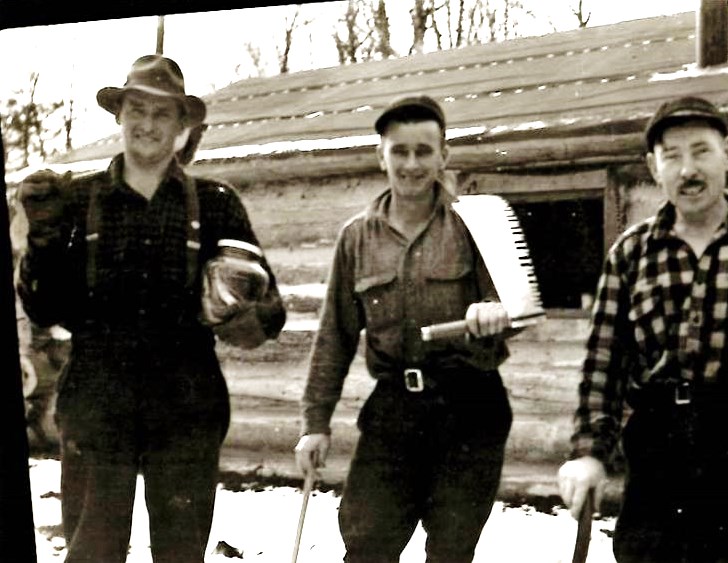
Grandpa T at Camp 7

Despite the rough and tumble camp life and the back-breaking work, Grandpa T spoke fondly of the men and working life in the camps. He always had a team of horses, and both he and the team were paid a wage. On the days the horses were at rest, he would venture out with a double bit axe and carefully study then notch the tree for felling. Sawyers would follow behind and with their long bladed “misery whips”, complete the back cut, and the tree would fall.

Grandpa and Grandma T also had a side hustle as gyppo loggers. Together they would occasionally purchase tax deed “forties” from the county, harvest and market the timber, then peddle off the resultant stump farm. Grandpa T was proud that his family made it through the Great Depression without asking for relief or a handout.

By the middle of Grandpa T’s years, the virgin forests were largely gone. There must have been a moment of reckoning as that last crew raced towards the end of those forests and suddenly there were virgin forests no more. Perhaps Grandpa T had to walk away from the lumber camp back through the stump farm left in the wake. The trees would eventually grow back into some very nice second growth forests, but it would be a virgin forest no more.

He spent the rest of his working years in the iron and taconite mines but had very few colorful iron and taconite stories to tell.

Grandpa T often said that he never cut a live tree ever again after leaving the lumber camps. My brothers and I spent countless days with him harvesting firewood in his 120-acre forest and can attest to that. He carefully navigated the farm tractor or snowmobile about, never damaging or scarring a tree and being ever mindful of creating ruts. Windfalls, lightning strikes, and blowdowns were carefully sawn up and the brush neatly stacked. A much-favored firewood source were the small diameter maples that had lost the race to the canopy and were starved of sunlight by the victors. “Rampikes,” he called them, and their trunks devoid of bark and branches resembled long bleached bones growing out of the ground. At the end of his life the 120 acres or rolling hills and flinty bluffs contained a pristine and healthy stand of quality maple, all made possible by meticulous stewardship and that surely made Mother Nature proud.

Atonement.

A giant man, Grandpa T’s imposing stature was only exceeded by the size of his heart. He loved his children and grandchildren and greatgrandchildren deeply and would do anything for any of us. Indeed, his guidance and generosity were life changing. Still, while he was alive there was this feeling that perhaps he didn’t really understand his distracted grandson who would look at a deer rather than eat it, and that grandson probably didn’t really understand him that well either.

I spent the better part of a decade working in the oilfields. The first two years were in the Alaskan Arctic as support staff constructing work camps and maintaining them. The monthly commute to work consisted of a flight seated in the back of a combi-cargo plane over the pristine tundra dotted with arctic polygons. As the flight neared Deadhorse, the virgin tundra morphed into the dizzying tentacles of a vast network of pipelines and production facilities. During the sunless arctic winter, the greasy auburn flames of the flares burning off hydrogen sulfide and natural gas cast an ominous glow onto the otherwise dark horizons.

But I felt no guilt. I was not the driller, was not tripping casing, was not doing wireline or coil tubing, was not constructing pipelines. I was support staff. And those big fat oil field paychecks sure bought a lot of groceries. I played a tiny part in providing habitat for humans in an inhospitable environment.  

Subsequent oil field employment in the Lower 48 transitioned from support to well service. Untold tanker loads of fresh water were dumped into the ever thirsty frack batteries. When there were not enough semi tractors and tankers in existence to feed enough fresh water to the insatiable fracking operations,  temporary soft pipelines, miles long were run, fed by pumps that sucked out aquifers 24/7 but could never quite fill the massive Poseidon tanks that replaced the frack batteries. I became a bulker, then a pressure pump operator feeding the grout that entombed steel casing that plunged miles deep into the earth. It was my job to go up on the rig floor and stab the head at the beginning of the pump job and then at the end, bust off the head with its accompanying dramatic geyser of grimy invert fluid. As a personal choice and for moral reasons, I never actually worked as a part of a frack crew but was now doing the dirty work none-the-less.

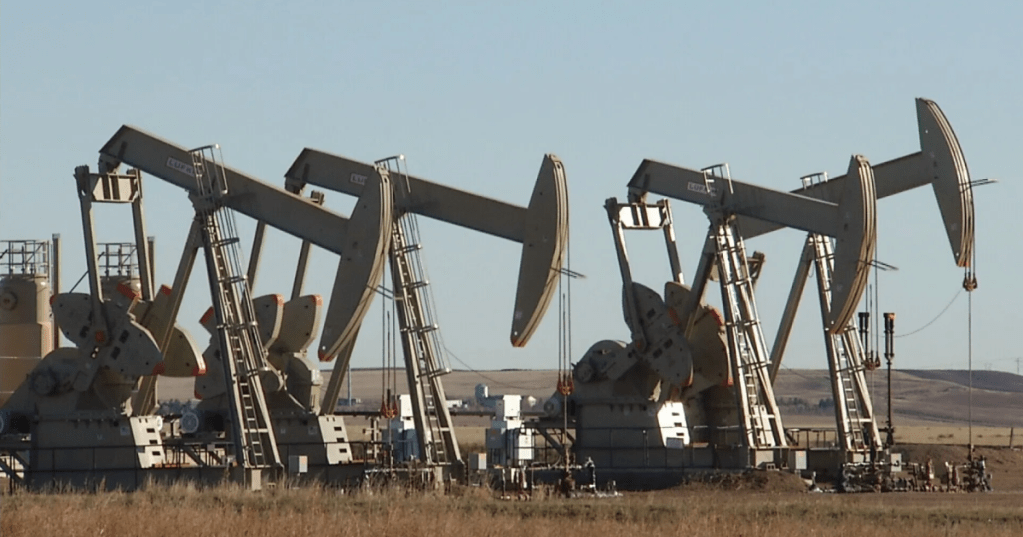
There was not a lot of guilt about doing such work in a place like the oil patches of Texas, as I had never seen Texas before there were oil wells in Texas. In my mind, Texas always had oil wells and always would. But Colorado, Montana, and North Dakota were different. In wonderings through the Bakken Patch in the 1980’s, a pumpjack was somewhat of an oddity. But suddenly years later wells and the accompanying pump jacks were proliferating at an astonishing rate.

My last oil field service job was in the Little Missouri Breaks, a truly beautiful place. As our work convoy climbed up out of this once pristine upside-down mountain and out onto the stark plains, the extent of it all struck me. It was now all just another oilfield. But those big fat oil field paychecks sure bought a lot of groceries. And I suddenly realized exactly why Grandpa T never cut another live tree. I played a very tiny but none-the-less active part in turning a rather unique portion of the American West into an industrial wasteland and could not simply rectify that as just being support staff.

Eventually simple economics will clean up the Bakken somewhat. The cast off and rusting equipment will go to scrap, the temporary work camps will vanish, the stacked-up drill rigs will relocate to another patch, the piles of well and pipeline casing will be buried in the ground or sent elsewhere. The traffic will ease, the rough necks and prostitutes and company men will move on to the next dirty bonanza. Eventually, the only sign that we were ever there will be the myriad of pumpjacks spread out from horizon to horizon, lazily drawing sequestered carbon to the surface. But there will never be that same pristine Little Missouri Breaks ever again.

That was then and here I am now, starting a new life out in the woods.

The lifetime passion project of a local trail boss includes caring for the nearby recreational trails, and he stopped by for a tour of my cabin. He eyed an old photo hanging on a beam. It was of Grandpa T wearing a wry smile and a jaunty Indiana Jones like hat, double bit axe over his shoulder; a misery whip sawyer and another notcher were beside him, the cook shanty of Hatten’s Camp in the background. While I shared this story the trail boss listened intently, nodding and studying the photo.

Grandpa T (L) at Hatten’s Camp

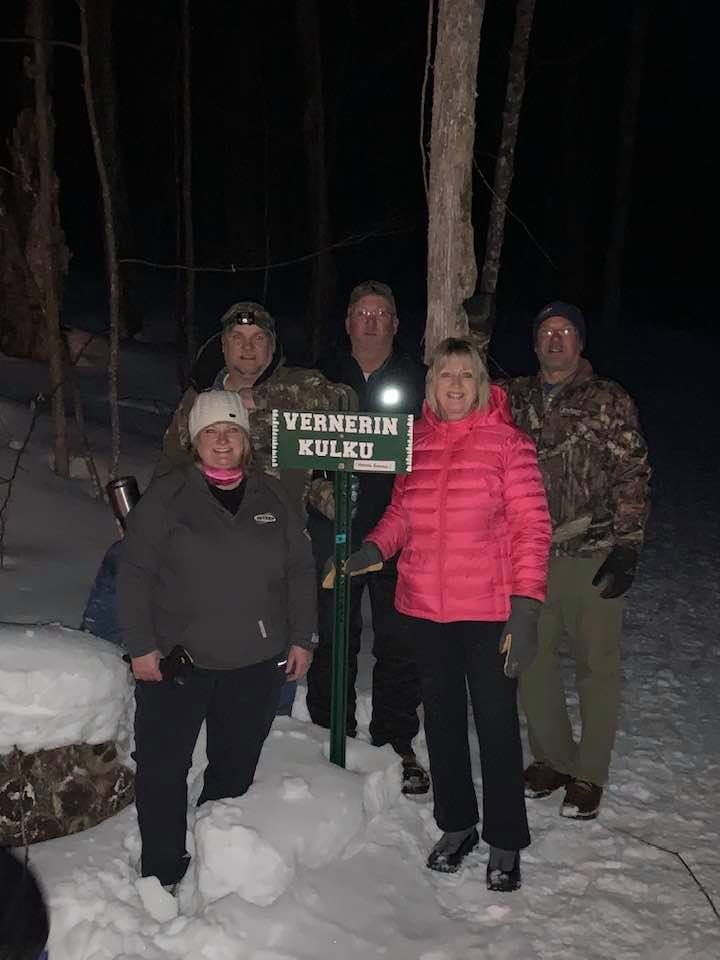
He later named a new trail near my cabin “Vernerin Kulku”, Finnish for Verner’s Traverse, to honor my Grandpa Verner Thompson.

The naming of that trail really brought the wagons full circle. We all do what we need to do to afford a bag of groceries and usually think little of the larger consequences. We can’t undo the past. But I hope to be as good a steward to my little patch of land as Grandpa T was to his 120 acres.

Atonement.

At the Vernerin Kulku

Previous Posts:

Bears Can Be Such Dicks

Bears Can Be Such Dicks

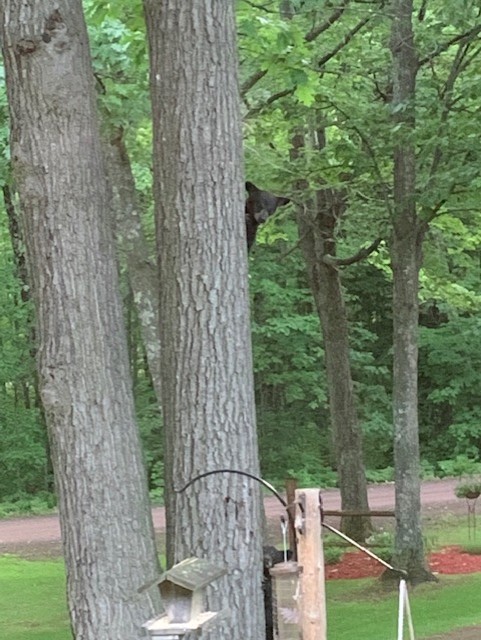
Ursus americanus, the North American black bear, has become an iconic symbol of Northern Wisconsin. And why not? They are a noble and beautiful creature yet portray an aura of being cute and cuddly. Their bumbling and playful cubs look like the morphing of a miniature furry clown with a professional wrestler. It seems that every other front yard in the Northwoods has a chainsaw carving of a bear proudly on display. It is almost as if Mother Nature had seen a cute and cuddly stuffed Teddy Bear and created Ursus americanus in its image.

courtesy of Cedar Firefly

But don’t be fooled. Ursus americanus can be such Richards!

Night one of this two-year journey into the woods began with the realization that there was not enough room in the marital household for the two of us. I hurriedly hooked the camper to the pickup and retreated. With no plan. A quick inventory revealed $28.00 in my wallet; a case of bottled water, multiple partial bags of chips and box goods in the camper cabinets leftover from the previous camping season; and since the camper fridge was used as the household beverage fridge, a lot of ice cold beer. So began this adventure with one week’s worth of gas money, a one-week supply of stale snacks, and a month’s supply of Leinie’s. It could have been much worse. The fridge could have been empty.

It was already the wee hours, but I started a campfire then rationed out some woefully stale chips that the crunch had departed from eight months prior. And I sipped down two-and-a-half cans of beer.  Once my nerves finally calmed, sleep came readily. But I forgot to clean off the picnic table.

I woke to discover an overturned picnic table, the chip bag emptied and tore to tiny shred and strewn about, and empty beer cans with their ends tore open like an exploding cigar in a vintage cartoon. Ursus americanus can be such a Richard!

courtesy of Cedar Firefly

The next few months were pure Ursus americanus hell. I am the absent-minded type and often forgot to put the gas grill securely away once it cooled down. The reward was always a disappearing gas grill. Sometimes it was found nearby, licked clean and looking as pristine as brand-new. Sometimes it was found licked clean and mildly battered. Occasionally it was found licked clean and battered nearly beyond further use. Once it was never found but was presumably licked clean. My absentmindedness single handedly caused a late season depletion of tabletop gas grills at the local big box mart.

Inadvertently putting a bag of trash in the bed of the pickup the evening before rather than the morning of trash day always resulted in the entire contents being chewed into miniscule slimy shreds then strewn all about my campground. Ursus americanus can be such a Richard!

It was only a matter of time before Ursus americanus and I reached a breaking point. That happened one unusually mild autumn day, a day so fine that instead of doing autumn things, a day at Lake Superior was in order.

I took a can of Leinie’s with me for the stroll down the beach. My daughter also happened to be there as well, picking agates. Unbeknownst to me, my lovely sprite granddaughter was there too and when she snuck up from behind and gave a firm Ursus americanus hug, the entire opened can of beer emptied into my lap. That was good for a laugh, we had a wonderful visit that day, then parted ways.

Upon return to the campsite the ale-soaked board shorts were spread out on the picnic table to dry and I settled in for an uncharacteristic catnap. A thump on the side of the camper stirred me. A few moments later there was the creaking and straining sound of wood fibers being strained to their limits and I bolted up in bed and found myself at eye level with Ursus americanus just outside the window. He was atop the picnic table, gnawing and licking at the beer-soaked board shorts.

I instinctively shouted and Ursus americanus, with barely a flex of a muscle leaped from the picnic table complete with a rather cocky midair Superman pose, board shorts clenched in teeth. I burst out the door after him, shouting like a lunatic. The board shorts were a cheap discount store knock off pair and not hardly worth chasing after a wild animal over. The bear sped away, the board shorts were eventually dropped, and I triumphantly recovered them, dripping with saliva. Apparently Ursus americanus likes Leinie’s about as much as I do, even if he must lick it from the crotch of a human’s clothing.

Positive gender identification under those circumstances and in that moment did not seem prudent. I presumed that the cub-less Ursus americanus would identify as male and therefore should be rightfully labeled as a Richard. But he could have just as well been she, mandating being labeled a Karen.

Friends and family all had suggestions on how to manage this unruly neighbor. The most popular idea was to simply shoot the beast, some suggested scare tactics ranging from flare guns to firecrackers, others thought the game warden could live trap this rogue and drop him off somewhere else to bother somebody else.

Truth is, Ursus americanus was just doing what he and she have done for thousands of years. They go to sleep in the winter, emerge in the spring, expend as little effort as possible to eat as much as possible, and hopefully survive and make a few little baby bears. I was the Richard that invaded their back yard and disrupted their routines and lives.

I began seeing less and less of Ursus americanus, to the point that any encounter or sighting became a rarity.

A few months ago, a guest and I where enjoying a meal when a sow and three cubs ambled by the cabin barely 15 feet beyond the open patio door. My guest momentarily locked eyes with the mama bear and I was both nervous and amused by the three bumbling and rollie-poly cubs as they tumbled off like drunken circus clowns. It was good to see my neighbors again. Perhaps they have forgiven and forgotten and no longer think of me as a Richard.