
The humble beaver does some pretty amazing things for their neighbors.
First and foremost, they build their dam and create a pond to suit their own needs. That pond is an environment, a food source, a defense, and an aquatic transportation system for the beaver colony. While it exists, the pond is not only a haven for its maker, but also for almost all woodland species from muskrats to wood ducks and redwing blackbirds. After the dam bursts, grasses and sedges sprout from the mud, further nurturing the biodiversity. Later yet, willow and aspen whips will lead the transition back to woodlands. Thirty years or more later, the beaver might return to favorable conditions and will again start a new life cycle with a newer beaver pond.
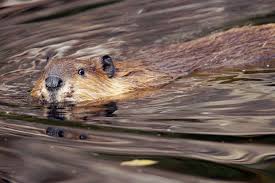
Clearly the positive effects on biodiversity over the entire course of the lifecycle of the beaver pond and its subsequent demise more than offset the beaver’s alterations and consumption while inhabiting the pond.
The beaver gives back more than is taken, when measured over time.
Humans, not so much.
Throughout the history of life on this planet there has been balance. Predators and prey and grazers and forage have generally stayed in proportion. There are surges and implosions to be sure but measured over time there has been consistent balance.
It is thought that the habit of early hominids to kill the largest and most lumbering creatures then leisurely feed off the carcass created the beginnings of socialization and its resultant increase in brain size. As the brain size increased for our ancestors the tools and methods of hunting became more efficient. Rather than becoming more physically efficient, such as the cheetah’s evolutionary ability run at ever greater speeds, humans simply raised their rates of consumption and became more efficient at aggregating that which was to be consumed.
Soon our large brains and opposable thumbs gave us a level of dominance over the environment where there was no longer a dark fear of becoming a snack for a lurking predator. That is not a bad thing. But our consumptive habits are affecting most every plant and animal species around us in negative ways. And that begs the question, can a human live a less consumptive life? Can we be more like the beaver and give more back than we take?
It just so happens that the minimalist lifestyle I have engaged in is the perfect Petri dish for just such an experiment and comparison. There is also access to very good data on the contrasting lifestyles.
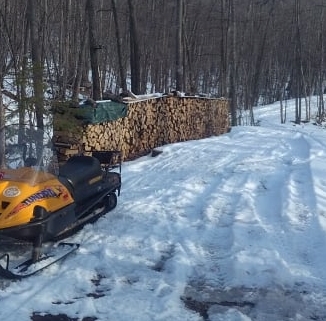
The short answer is that yes, a human can live a comfortable life with a dramatically smaller footprint.
By comparing an off-grid cabin with a more traditional on the grid home, each located barely a mile apart and within the same microclimate, a very dramatic conclusion can be drawn. The carbon footprint of living off-grid is 17% of the on-grid lifestyle. Water consumption is 10% in the off-grid cabin. Land fill waste for the cabin is about 1/13 of that of a normal household in Wisconsin.
So, can getting lost in the forest and living an off-grid lifestyle save the planet if done on a large scale? Probably not, as there are a lot of people on the planet and only so much land for us to fan out upon.
But worthy of note is that environmentally sound habits can be adopted by anybody living anywhere. These good habits and efficiencies also pay financial dividends. None of us would take a stack of hundred-dollar bills and light them on fire, but that is exactly what we are doing when we unnecessarily waste energy, water, over consume, or create excessive garbage.
But can we truly be like the beaver and give back more than we take? Probably not, at least not without huge lifestyle adjustments. But perhaps we can do a better job reducing the negative impacts we have created.
Part Two:
For those of you who like to geek out on comparisons, here we go!
What follows is not meant to be a scientific treatise of living off the grid nor is it a political statement, it is merely a compilation of my experience. As such there is a certain amount of latitude. For example, the carbon footprint of producing carbon neutral firewood is included in the statistics for the simple reason that I was curious what it might be. (The overall carbon footprint of the propane consumed, however, is absent and only the BTU value of the propane that exists within my propane tank and then consumed is represented, as it is nearly impossible for a mere mortal non-brainiac layman to calculate the BTU investment into the production of a BTU of propane fuel). Hydrocarbon exploration, production, refinement, and transport all require a certain amount of energy input, just as the production and distribution of biomass fuels such as firewood requires a certain amount of energy input.
The traditional on-grid example presented is a three-bedroom energy Code compliant dwelling occupied by two persons and located in the extreme Snowbelt region of Northern Wisconsin. Heat is provided by a natural gas fired boiler feeding in-floor heat. Electricity is provided by a traditional on the grid utility service provider.
The off-grid example is a single bedroom energy Code compliant cabin located about one mile away from the on-grid example. Heat is provided by a wood stove fueled by waste timber from onsite. Lighting, cooking, and refrigeration are fueled by propane. A gasoline fueled generator occasionally is used to recharge batteries or to power a seldom used small microwave oven. A cell phone provides communication and a hotspot for a laptop computer, both of which are recharged almost exclusively by power sources in a Ford Ranger pickup truck.
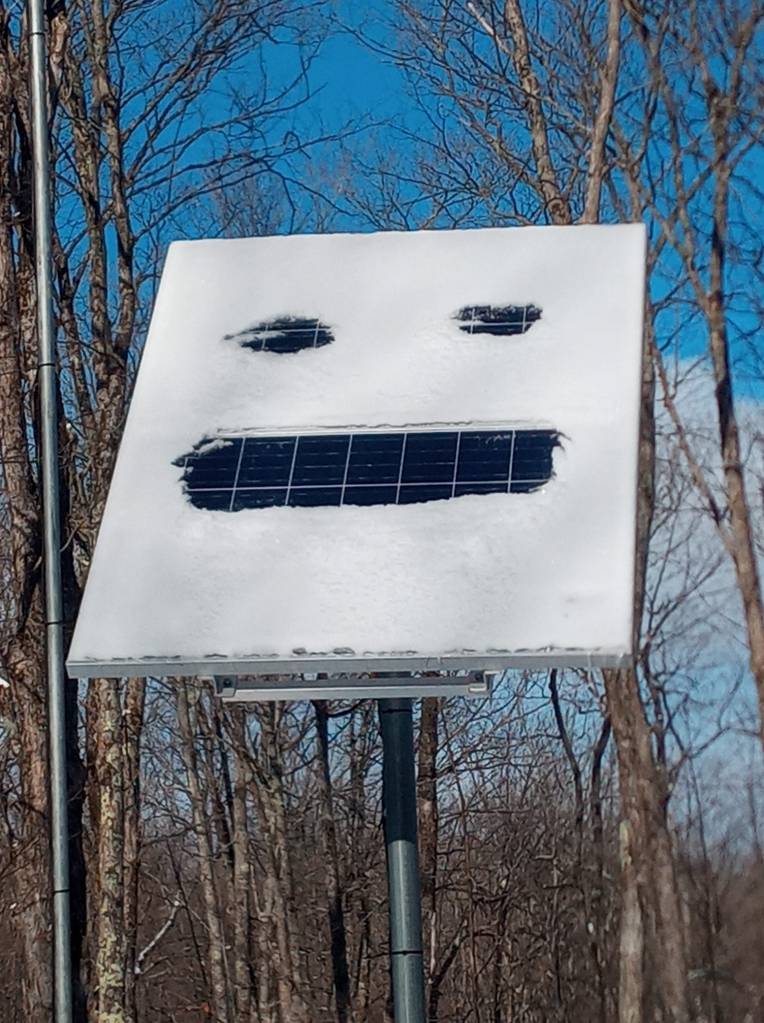
Currently the sauna is electrified by solar panels with very good results.
All energy sources, whether hydrocarbon, electrical, or biomass have been converted into British Thermal Units (BTU) for apples-to-apples comparison. (It is impossible to know just what percentage of the on-grid example electricity is produced by carbon neutral means such as hydro-electric, wind, solar, or biomass fueled, so it will be presumed to be generated by the reasonable assumption that 80% is fossil fuel generated).
First up, the compilations for the traditional on-grid home. This includes the energy for all aspects of domestic life such as heat, lighting, cooking, bathing, clothes washing, etc.
Annual electrical consumption 22,651,163 BTU
Annual natural gas consumption 107,830,715 BTU
Total annual household energy consumption 130,481,878 BTU
Minus presumed carbon neutral electricity production(20%) -4,530,232 BTU
Total annual carbon footprint for traditional home 125,951,646 BTU
This specific household consumed 22,000 gallons of water per year, far less than the Wisconsin design flow estimates of 36,500 gallons per year. Additionally, the average Wisconsin household generates 1,779 pounds-just short of one ton-per year of land fill waste.
Next, the off-grid cabin.
Propane for lighting, cooking, and refrigeration 17,375,880 BTU
Gasoline for generator 1,413,146 BTU
Firewood production, (gasoline and diesel fuel) 842,002 BTU
BTU equivalent of laundromat electricity (estimated) 1,144,000 BTU
Total annual carbon footprint for off grid home 20,775,028 BTU
By carefully purchasing products based upon packaging and the ability to recycle, annual landfill waste output was 39 cubic feet and weighed 127 pounds.
Annual water consumption for sauna, bathing and dishwashing was 884 gallons per year, water harvested from an artesian well as drinking and cooking water was 274 gallons per year, and the estimated water consumption at the laundromat was 1170 gallons per year; for an annual total water consumption of 2,328 gallons per year.
The statistics for heating the off-grid cabin with firewood are:
11 Fireplace cords of mixed hardwood 88,000,000 BTU
Hydrocarbons consumed in firewood production 842,002 BTU
Net carbon neutral consumption for cabin heat 87,158,000 BTU
Note that as the firewood is carbon neutral, and has had the hydrocarbon footprint subtracted, it does not apply towards the overall carbon footprint of the off-grid lifestyle. The harvesting of firewood also is great exercise and helps keep me healthy and happy.
By burning firewood, one must think forward not just a moment or day or a week, but an entire year or more. To ensure an adequate source of heat, the firewood must be cut and seasoned at least an entire year in advance. It is easier to dial a thermostat and have the instant gratification of the perfect temperature magically happen, but at what cost?
It is a major lifestyle commitment to go off-grid. It is more work to carefully cook your next meal from staples rather than eat out or impatiently stare at a microwave oven that is harshly nuking your next prepackaged meal. Living on the grid can be easier. But at what cost?
 The Unexpected Minimalist
I need to to thank you for this great read!! I absolutely loved every little bit of it. I have got you book-marked to look at new things you post…
LikeLike
Thank you for the kind words!
LikeLike